| Location | Cape Town |
|---|---|
| Field | Refugees / Asylum Seekers |
| Director | Charles Mutabazi |
| Website | www.aresta.org.za |
Vision and Mission
Our Vision is to improve quality of refugee’s life through the provision of educational, psychosocial services, self-reliance programmes, empowering the refugee community and promoting and advocating for refugee rights; and to restore the human dignity of refugees through Counselling, Education and Training.
ARESTA’s mission is to make a contribution to the integration of refugees into local community.
ARESTA Objectives
• improve quality of refugee's life through the provision of educational, psychosocial services;
• restore the human dignity of refugees through Education and Training;
• promote Refugees' local integration;
• facilitate skills development and employment opportunity for the Refugee Community;
• advocate for the improvement of Refugees and Asylum seekers situation in South Africa;
• facilitate job creation and income generation activities within the refugee community : empower Refugees toward self-sustainability;
• promote gender equity and diversity mainstream in ARESTA's structures, projects and activities;
• develop and strengthen partnerships and networks with other Refugee service providers, governmental institutions, structures and/or agencies;
• enhance the research and information on security and development activities in various countries of origin of refugee and asylum seekers;
• promote voluntary repatriation as alternative to local integration.
ARESTA Areas of Interventions
• Education (English Language courses);
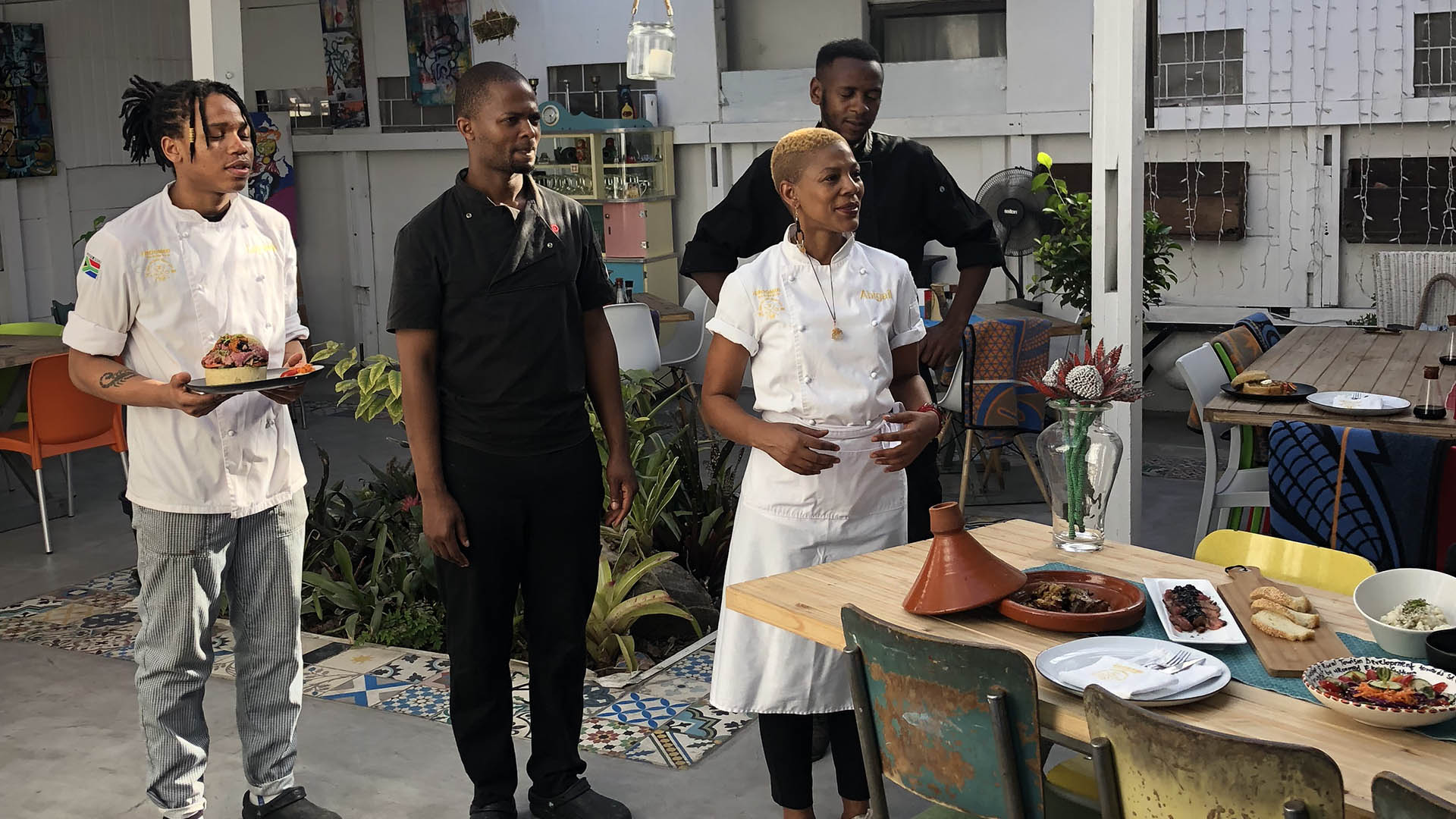
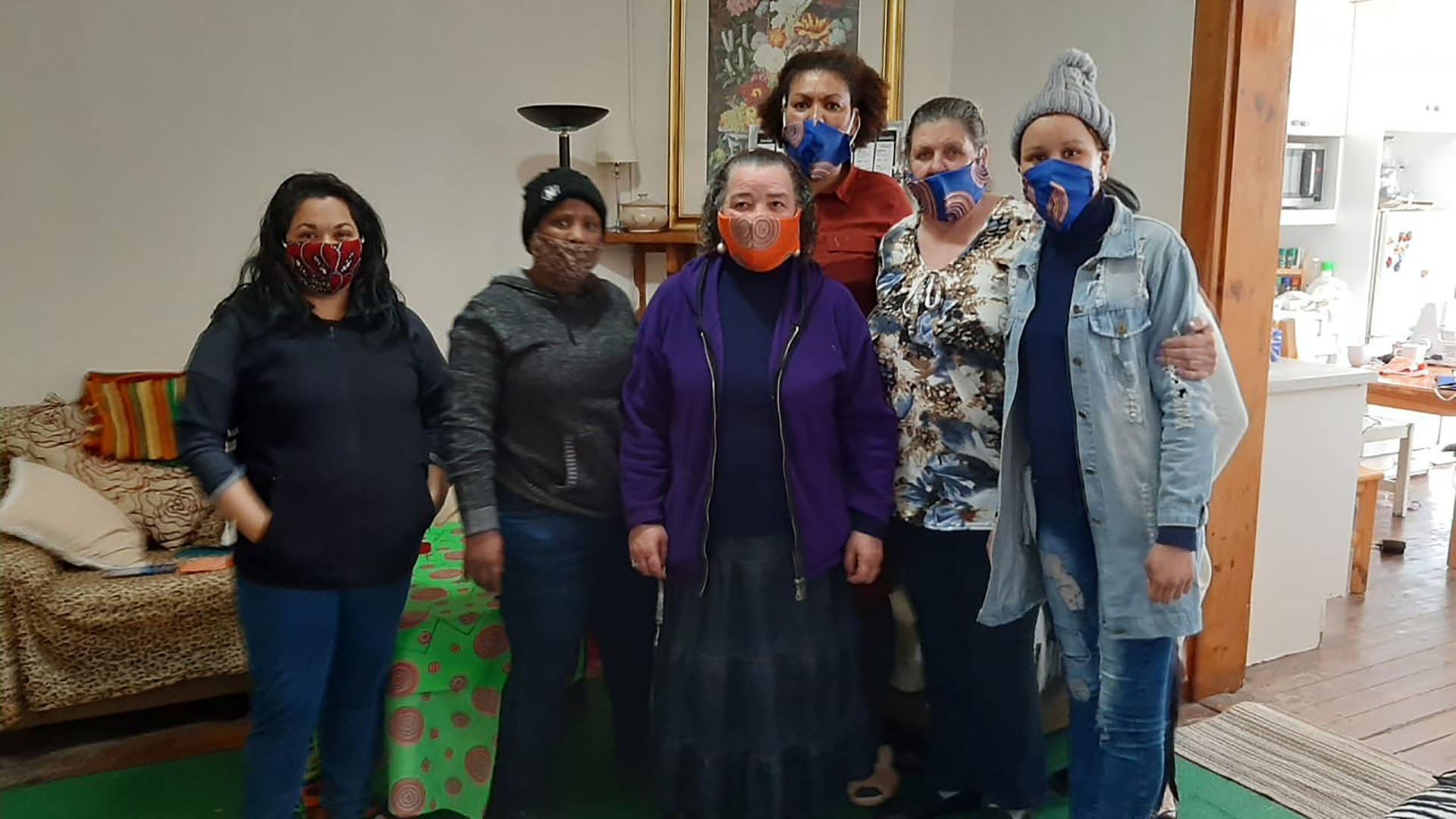
• Vocational training (Sewing, Food preparation, Food service);
• Income Generation /Self - Reliance Activities;
• Entrepreneurship /Enterprise Development;
• Community Development Services;
• Self-sustainability Programme initiatives (Business Training & Management);
• Refugee Rights Awareness & Education;
• Lobby and Advocacy.
Who is a refugee?
A person who has a well-founded fear of being persecuted because of his or her race, religion, nationality, political opinion or membership of a particular social group.
Or a person whose life, physical safety or freedom is endangered because of international or civil war in part or the whole of his or her country.
Who is an Asylum seeker?
A person who has lodged an application for asylum with the Department of Home Affairs and who is waiting for a decision on refugee status.
What are their rights and obligations?
According to the conventions and legislations the Republic of South Africa is a signatory to, Refugees and Asylum seekers are afforded virtually the same rights as South African nationals (accept the right to vote).
Refugees and Asylum seekers' rights
• full legal protection of the Bill of Rights of the Constitution;
• seek for employment, get self employed, and enter into contracts and leases;
• benefit from basic health services;
• benefit from basic primary education, access secondary and tertiary education;
Refugees and Asylum seekers' obligations
• follow the laws and regulations of the Republic of South Africa;
• respect the rights of others in the Republic.
Section 22 Permit: Temporary, renewable permit contemplated in the 1998 Refugees Act, issued to an asylum seeker as a testament that the bearer's claim for asylum is still to be certified, allowing the bearer to reside in South Africa, but prohibiting work and study (Unless otherwise stated).
Section 24 Permit: Identification document contemplated in the 1998 Refugees Act granting refugee status to bearer and allowing him/her to reside in South Africa for a period of two years (renewable).
2008 PROJECTS
Careers and Educational Counseling
Counselling is one of the key interventions provided by ARESTA. It is crucial in the networking of clients towards the integration process.
Majority of our clients arrive in our offices confused, disoriented, traumatized and unable to speak English. ARESTA's counseling sessions are geared towards restoring dignity and improving quality of life of its clients and to be able to deal with trauma and disorientation in South Africa.
ARESTA's staffs welcome its visitors and gives advice on educational programmes and employment opportunities. The overall feedback from ARESTA beneficiaries of assistance in 2007 was that they are better able to care for themselves and their families, both economically and psychosocially.
English Language Training
ARESTA runs English classes at Beginner, Intermediate and Advanced levels four days per week, and our graduates receive a certificate that is recognized by tertiary education institutions.
These English classes are one of ARESTA’s core programs. ARESTA teaches classes at our premises in Athlone, and makes referrals directly from our Athlone offices to other language courses in different parts of the Cape Peninsula. English classes are very appreciated by the Refugees and Asylum seekers, because it is one of the biggest gaps they face when arriving in South Africa. By learning English, they can finally rise from victims to self-reliant members of the society who can have proper access to education, employment, and healthcare…
Refugee Rights Awareness and Education
Refugees need to know their rights and obligations in South Africa, so that they are empowered to face xenophobia and discrimination, and so that they can claim their rights when they try to access social services like schools, hospitals or universities.
On the other hand Refugees need to make their plight known to the South African society, so that they can face less discrimination and integrate more easily.
ARESTA goes to the various Refugee Service Providers and the Department of Home Affairs to interact with and provide information for Refugees and Asylum seekers while these are waiting for the various services. Leaflets on basic information will be handed out and ARESTA staff and volunteers will be available for answering questions.
Art and Creative Expression
In light of introducing a balance in mindset and value for the lives of our participants, we introduce a safe space to nurture and expressive ourselves creatively. ……one realizes through past experiences, an Income Generation Angle may come into play, as the learner takes ownership of their new found Inner-Skills.
Painting Sessions are incredibly therapeutic, through these Art Sessions, the individual shows strengthens and clearly is open to processing self, and it’s an unspoken life skill like few others.
Income Generation Activities: Amazing Beadwork Cooperative
They are a group of nine women from the Burundi, Democratic Republic of Congo, Somalia and Rwanda. They first started learning English at ARESTA in 2005, and then learnt beading skills, which could be used to make products to sell and to improve their livelihoods and help support their families. In addition to improving their beading skills, they have decided to make their beading group a small business, which they call the Amazing Beadwork Cooperative. It has been a uniquely fascinating and rewarding exercise.
Formal English classes often fail to offer the opportunity for students to spend valuable social time together, and with their teacher. This time is important in terms of establishing a group identity, learning to feel comfortable in a class environment, and practising the words they are learning. Our class is split into two, first a formal English class for one and a half hours, then a beading class for one and a half hour. The beading time allows this informal contact so necessary for successful language learning.
In addition to beading skills, students are encouraged to think about the marketing and sales of their products, especially the basic skills of costing, pricing, and customer relations. After the beading lessons are over, a short duration of the training sessions will focus on the English vocabulary students need to sell their items successfully.
Group members have recently undergone a constitution writing process with assistance from a post-graduate group of Anthropology students from the University of Cape Town. Now the group can begin in earnest to run a sustainable and profitable business.
Community Development Skills Training for Refugees Wanting/Preparing to Repatriate
Refugees wanting community development skills training before repatriating to their home country approach and apply to ARESTA’s Programme for assistance. Increased number of applicants want to gain some kind of skills training before going back to work for the rehabilitation and development of their country of origin.
ARESTA has enhanced the research and information on security and development activities in various countries of origin of Refugees and Asylum seekers, to develop appropriate programs for voluntary repatriation purposes. We promote the voluntary repatriation as alternative to local integration.
In the knowledge that very few opportunities for training are available in current Refugees' countries of origin, ARESTA is trying to empower them and accommodate as many of these clients as possible under its existing program. Thanks to the researches conducted, we offer counselling and training that are relevant to Refugee home countries.
Discussion and Support Groups
This project is run in partnership with the Institute of healing of Memories (IOHM). It is an attempt to respond holistically to the problems, which refugees have suffered, either in their countries of origin or in South Africa. This project is committed to providing a safe space for people to talk about their experiences of relationships, family, culture, expectations, violence, war, xenophobia, settlement in South Africa and whatever the group want to talk about, aiding them in their journey from victim to survivor.
HIV/AIDS, Lifeskills Training and Gender Awareness Workshops
ARESTA organizes HIV/AIDS and Gender Awareness Workshops for the Refugees attending its courses and trainings. Facilitators come at least once for each of our intake. Facilitators are sent by the Sonke Gender Justice Network (HIV/AIDS, Gender Equality, Human Rights). They run Information, Education and Communication sessions including Sexually Transmitted Diseases (STDs) and HIV/AIDS training, and the issues surrounding the pandemic.
The purpose of the activity is to contribute to the fight against HIV/AIDS scourge by improving the quality of life of the infected and affected, and building up capacity among the Refugee community, so that they become able to care for the affected and infected and deal with the effects of HIV/AIDS and its manifestations.
Entrepreneurship Development and Business Training, Business Planning Management
This programme is designed to assist with business skills' training people who wish to set up small businesses. It is a natural continuation to the Vocational and Income Generation Trainings provided by ARESTA.
Students attend a two week Business course. Business skills evolve around the development of marketing strategy, financial management and tendering. Business plan development focuses around the implementation of these strategies. After the one week course, trainers guide participants through the development of a business plan, looking at proposal writing and skills training in this field.
The aim of this activity is to contribute towards socio-economic upliftment by engaging Refugee communities in sustainable income generating & job creation activities as well as promoting an entrepreneurial culture.
ARESTA Volunteers
The goal of ARESTA volunteers is to place energetic and motivated volunteers throughout the Cape Town refugee service provider network. This gives the volunteers' desired experience of working in small NGOs and with refugees while at the same time providing the network with human resources to fill tasks otherwise not accomplished.
The established programs for Intern/Volunteers in ARESTA are a valuable resource for innovation and research to enhance our programs. With this ARESTA has the possibility to increase its capacity through the use of the volunteers' and interns' expertise and time. Thus being said, we at ARESTA highly appreciate their input within its programs.
Any person interested in becoming a part of ARESTA's volunteers program should contact ARESTA to speak with the volunteer manager or e-mail: coordinator@aresta.org.za
Office Hours: Monday – Friday: 08h30 – 16h30 Friday: 08h30 – 15h30
Due to the number of clients wishing to access our services we have arranged for certain times of the week when we explain our programmes and complete referrals.
Donations to ARESTA
Should you wish to make further donation to support our project, please contact Uthando South Africa.
We are deeply grateful to the French Catholic Committee against Hunger & For Development (CCFD), the ABSA Group, the United Nations High Commissioner for Refugees (UNHCR), the Multi - Agency Grants Initiatives (MAGI) and Uthando South Africa who are sustaining our work through the year 2008.
Quote from Thabo Mbeki, President of the Republic of South Africa
“Our intimate relationship with the rest of our Continent is illustrated by the significant number of fellow Africans who have sought to settle in South Africa since 1994. Undoubtedly, this trend will continue, adding a new richness to our society. Many of these new immigrants bring with them important skills that our country needs. Many of them are also people who are creative, full of initiative and driven by an enterprising spirit. The more they impart these characteristics to us as well, the better we will be as a people and a society. Necessarily, we must continue to be vigilant against any evidence of xenophobia against the African immigrants. It is fundamentally wrong and unacceptable that we should treat people who come to us as friends as though they are our enemies. We should also never forget that the same peoples welcomed us to their own countries when many of our citizens had to go into exile as a result of the brutality of the apartheid system. To express the critical importance of Africa to our selves, both black and white, we should say that we are African or we are nothing.” (ANC Today, May 2001, cited in SAMP, 2001).
The greatest glory in living lies not in never falling, but in rising every time we fall.
Nelson Mandela