

<?xml version="1.0" encoding="UTF-8"?>
<projects type="array">
  <project>
    <description>&lt;p&gt;&lt;strong&gt;Context &lt;/strong&gt;&lt;span&gt;&lt;br /&gt;
The Cape Flats townships are the &amp;ldquo;Eastern Cape on Cape Town&amp;rsquo;s doorstep&amp;rdquo;, populated largely by economic refugees from the previous apartheid homelands of the Ciskei and Transkei. New arrivals into Cape Town are officially estimated to be 1200/month. Unemployment figures continue to be in the region of 30%-40%. Abalimi Bezekhaya (the planters of the home) attempts to alleviate poverty and create self-employment through gardening and micro-farming in the townships of Cape Town. &lt;/span&gt;&lt;/p&gt;
&lt;div&gt;
&lt;p&gt;&lt;span&gt;ABALIMI BEZEKHAYA (the Planters of the Home), founded in 1982/83, is a Voluntary Association registered as a Non Profit Organisation (NPO) with the Department of Social Development (S.A.). &lt;/span&gt;&lt;/p&gt;
&lt;/div&gt;
&lt;div&gt;
&lt;p&gt;&lt;strong&gt;Infrastructure, Staffing &amp;amp; Target Group&lt;/strong&gt;&lt;span&gt; &lt;br /&gt;
ABALIMI runs an administrative office in Phillipi and works out of &lt;em&gt;two&lt;/em&gt; non-profit Garden Centres/nurseries in Khayelitsha and Nyanga. The majority of the core staff are women and are recruited directly from our Target Group. We currently have a core full time &lt;em&gt;staff &lt;/em&gt;of (up to) twelve , and part-time, contracted or casual staff of (up to) 13 persons at any one time. Only three staff members are entirely administrative. Everyone else, including management level staff - are directly involved in project delivery to ourTarget Groupin the field. &lt;/span&gt;&lt;/p&gt;
&lt;/div&gt;
&lt;div&gt;
&lt;p&gt;&lt;strong&gt;Target Group&lt;/strong&gt;&lt;span&gt;&amp;nbsp;&lt;br /&gt;
The disadvantaged, the poor and the unemployed. In particular, women, mothers and grandmothers are our main target group, not because we exclude anyone else, but because it is mainly they who come forward and actually carry the impulse of gardening and micro-farming in the townships. Women, mothers and grandmothers more often than not represent whole families, thus the direct impact of our work goes well beyond individuals.&lt;/span&gt;&lt;/p&gt;
&lt;/div&gt;
&lt;div&gt;
&lt;p&gt;&lt;strong&gt;Key Result Areas (KRA&amp;rsquo;s)&lt;br /&gt;
&lt;/strong&gt;ABALIMI accounts for its core activities under seven Key Result Areas, as follows&amp;hellip;&lt;/p&gt;
&lt;/div&gt;
&lt;div&gt;
&lt;p&gt;&lt;u&gt;KRA 1. Project Implementation: &lt;/u&gt;ABALIMI&lt;span&gt; supports individual households and groups to implement own gardening and micro-farming projects. This includes between 300-1000&lt;em&gt; &lt;/em&gt;home based vegetable gardens per annum and 50 community group projects (school gardens, community gardens, communal gardens) per annum . &lt;/span&gt;&lt;/p&gt;
&lt;/div&gt;
&lt;div&gt;
&lt;p&gt;&lt;u&gt;KRA 2. Resource Supply:&lt;/u&gt;&lt;span&gt; ABALIMI runs two non-profit nursery projects in Nyanga and Khayelitsha. These are called People&amp;rsquo;s Garden Centre&amp;rsquo;s and they supply free advice, information and subsidised gardening inputs such as trees, groundcovers, soil improvers (e.g.: manure), seed, seedlings, basic tools, windbreaks and safe pest control remedies to our Target Group. &lt;/span&gt;&lt;/p&gt;
&lt;/div&gt;
&lt;div&gt;
&lt;p&gt;&lt;u&gt;KRA 3. Training:&lt;/u&gt;&lt;span&gt; we train up to 1000 people each year through 4-day Basic organic vegetable growing courses, year-round on-site technical follow-up support visits and demonstrations to projects, and the agri-Planner training game &amp;ndash; this game was developed (with Abalimi&amp;rsquo;s assistance) by the South African Institute for Entrepreneurship (SAIE). It is a special business training programme for even illiterate people, in the form of a game which instructs trainees on agri-business principles and practices for vegetable gardening. This unique training game is now being rolled out in Cape Town and nationally. &lt;/span&gt;&lt;/p&gt;
&lt;/div&gt;
&lt;div&gt;
&lt;p&gt;&lt;u&gt;KRA 4. Community Building: &lt;/u&gt;the social benefits of organic gardening and micro-farming among the poor are enhanced through activities such as: &lt;/p&gt;
&lt;/div&gt;
&lt;div&gt;
&lt;p&gt;&lt;span&gt;* iLIMA- mutual help work events where members from different community projects gather and work together on one community project site to accomplish large or difficult tasks. iLIMA is always accompanied by good food and celebration at the end of the day, radiating goodwill out into the surrounding community. &lt;/span&gt;&lt;/p&gt;
&lt;/div&gt;
&lt;div&gt;
&lt;p&gt;&lt;span&gt;* Horizontal (farmer to farmer) Learning events- this is where the gardeners and farmers gather to share stories, difficulties, problems, solutions and achievements among themselves. These events are highly motivating and result in greater efforts to self-improve.&lt;/span&gt;&lt;/p&gt;
&lt;/div&gt;
&lt;div&gt;
&lt;p&gt;&lt;span&gt;* Savings Mobilisation &amp;ndash; every community garden project which works with ABALIMI must open a project savings account if they want to make use of ABALIMI&amp;rsquo;s marketing projects for their organic produce. Community project savings is a good foundation for further development. See Point 2 PROJECT TYPES for more information on Marketing Projects&lt;/span&gt;&lt;/p&gt;
&lt;/div&gt;
&lt;div&gt;
&lt;p&gt;&lt;u&gt;KRA 5. Partnerships and Networking: &lt;/u&gt;ABALIMI&lt;span&gt;, through its own partnerships and networks, assists community projects to connect to other opportunities and services which they may require. For example, a community garden group may wish to start up a sewing group, or obtain support from another service provider. ABALIMI points the community projects in the right direction and often helps to make the connections. Furthermore, ABALIMI incubates or hosts cross-cutting Special Purpose pr&lt;em&gt;ojects&lt;/em&gt; which enhance our core business and these Special Purpose projects are seen as &amp;ldquo;internal partners&amp;rdquo; until they become independent and/or autonomous of ABALIMI, or become incorporated into ABALIMI. A list is provided below under Point 2- Project Types..&lt;/span&gt;&lt;/p&gt;
&lt;/div&gt;
&lt;div&gt;
&lt;p&gt;&lt;u&gt;KRA 6. Research, Monitoring and Evaluation (M + E):&lt;/u&gt;&lt;span&gt; ABALIMI has hosted or collaborated with many researchers over the years and continues to do so. ABALIMI utilises the results of this research to fine tune its own development practice, so that community projects become more and more sustainable within a better defined step-by-step process. ABALIMI has developed a unique Development Continuum and Sustainability Index framework which is able to track sustainable development of community projects along a clear pathway. The development continuum proceeds through four phases. Projects can remain in each phase permanantly or move backwards and forwards between phases, depending on circumstances. The phases are: Survival Level, Subsistence Level and Livelihood Level and Commercial Level. More information available on request. &lt;/span&gt;&lt;/p&gt;
&lt;/div&gt;
&lt;div&gt;
&lt;p&gt;&lt;u&gt;KRA 7. ABALIMI&amp;rsquo;s Organisational and Financial Sustainability: &lt;/u&gt;&lt;span&gt;This internal Key Result Area focuses on ABALIMI&amp;rsquo;s legal, general and financial management/development, human resources, fundraising and communication functions. ABALIMI&lt;em&gt; exists to deliver to its Target Group&lt;/em&gt; and must ensure that everything possible is done to ensure its health and efficiency in order that it can fulfil its mission. &lt;/span&gt;&lt;/p&gt;
&lt;/div&gt;
&lt;div&gt;
&lt;p&gt;&lt;strong&gt;Growth in demand for our services&lt;br /&gt;
&lt;/strong&gt;&lt;span&gt;An average of 25 new applications from community groups for help with their gardening and micro-farming projects is recieved by ABALIMI every year.&lt;/span&gt;&lt;/p&gt;
&lt;/div&gt;
&lt;div&gt;
&lt;p&gt;&lt;strong&gt;Accounting &amp;amp; Financial Statements&lt;br /&gt;
&lt;/strong&gt;ABALIMI is audited annually by MGI Bass Gordon. Financial statements are available on request.&lt;/p&gt;
&lt;/div&gt;
&lt;div&gt;
&lt;p&gt;&lt;strong&gt;Funders/donors&lt;br /&gt;
&lt;/strong&gt;&lt;span&gt;ABALIMI is fortunate to have a loyal range of Friends- funder and donor partners, international and local, who ensure that our work continues. As our work grows, however, we must continually build new relationships with prospective donor and funder partners. ABALIMI&amp;rsquo;s policy as a Non Government Organisation (NGO) is to avoid reliance on Government funds for core costs, although we do utilise such funds when available for specific projects. A full donor list (over 200 per annum) is included in the latest Newsletter and in the financial statements. &lt;/span&gt;&lt;/p&gt;
&lt;/div&gt;
&lt;div&gt;
&lt;p&gt;&lt;strong&gt;Typical PROJECT TYPES &amp;amp; AVERAGE COSTS&lt;br /&gt;
&lt;/strong&gt;&lt;strong&gt;- Community Gardens on council land and on school grounds&lt;br /&gt;
&lt;/strong&gt;&lt;span&gt;Size ranges between 1000m&lt;sup&gt;2&lt;/sup&gt; to 5000m&lt;sup&gt;2&lt;/sup&gt; or larger. ABALIMI offers support with planning, capital developments, installation of plant &amp;amp; equipment, training, soil inputs, seed and plants and follow-up over an initial three year period. If a community garden site has no infrastructure, we budget up to R85m&lt;sup&gt;2&lt;/sup&gt;/annum over three years, inclusive fertility stabilisation, planning, capital installations, plant &amp;amp; equipment, training, organisation building and follow-up. ABALIMI-supported urban organic community gardens are the first to have proven that permanent livelihoods can be created on micro projects, while conserving and promoting indigenous flora. A 1000m&lt;sup&gt;2&lt;/sup&gt; community garden currently costs approximately R100 000 in total to set up over a three year period. A minimum of two sustainable family livelihoods can be created on 1000m&lt;sup&gt;2&lt;/sup&gt;.&lt;/span&gt;&lt;/p&gt;
&lt;/div&gt;
&lt;div&gt;
&lt;p&gt;&lt;strong&gt;- Household Survival and Subsistence Gardens &lt;br /&gt;
&lt;/strong&gt;&lt;span&gt;The foundation of our target group are pure survivalists, who &amp;ldquo;temporarily&amp;rdquo; engage in vegetable production at home until a &amp;ldquo;job comes along&amp;rdquo;. By supporting such individuals to survive and subsist through gardening, we are also inculcating an emerging organic gardening culture which is becoming a permanent feature of the urban environment among the poor in Cape Town. The skills learned by survival and subsistence gardeners remain with them, even if they stop &amp;ldquo;when they get a job&amp;rdquo; and can be drawn upon again in future. ABALIMI provides training, advice and subsidised start-up inputs to survivalists. It costs up to R1750/household to establish a viable organic household vegetable garden - this cost is mainly for training and follow-up but includes a start-up pack. ABALIMI offers full subsidies to indigent households, who comprise the majority of our client/target group. Usually, however, we obtain a token payment for the training, in the form of a R30 registration fee.&lt;/span&gt;&lt;/p&gt;
&lt;/div&gt;
&lt;div&gt;
&lt;p&gt;&lt;strong&gt;- Community Greening projects&lt;br /&gt;
&lt;/strong&gt;Tree Planting &lt;span&gt;carries on year round, although we focus on the Autumn/Winter season (May-July) in Cape Town, as the winter rains help a great deal in establishment of trees. Cape Flora is our priority and we do not plant invasive exotics. It costs R125 to plant one tree, with training and follow-up. Trees are planted mainly in community gardens as windbreaks, but also (on request) in community institutions such as educares, community centres and schools where applications for support from these institutions have been received and approved.&lt;/span&gt;&lt;/p&gt;
&lt;/div&gt;
&lt;div&gt;
&lt;p&gt;&lt;strong&gt;Special Purpose projects within ABALIMI (&amp;ldquo;internal partners&amp;rdquo; )&lt;br /&gt;
- Surplus marketing project&lt;br /&gt;
&lt;/strong&gt;&lt;span&gt;Launched in 2007, after a trial period in 2006, this project identifies and sells on a weekly basis surplus produce from subsistence gardens (produce which cannot be easily sold inside the townships) to the wider market outside of the townships. &lt;/span&gt;&lt;/p&gt;
&lt;/div&gt;
&lt;div&gt;
&lt;p&gt;&lt;strong&gt;- Harvest of Hope project&lt;br /&gt;
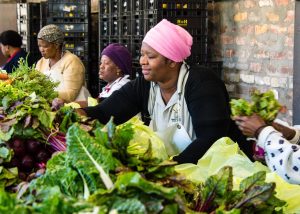
&lt;/strong&gt;&lt;span&gt;Llaunched in Feb 2008, the Harvest of Hope project utilises a small Pack Shed to collect, pack and deliver organic vegetable boxes to families in Cape Town. This project offers regular income security to the community farmers, by contracting them to grow seasonal organic produce at guaranteed prices. Families at rich schools in Cape Town sign up in advance to buy Harvest of Hope boxes. For more information contact &lt;a href="mailto:harvestofhope@abalimi.org.za"&gt;harvestofhope@abalimi.org.za&lt;/a&gt; &lt;/span&gt;&lt;/p&gt;
&lt;/div&gt;
&lt;div&gt;
&lt;p&gt;&lt;strong&gt;- Moya we Khaya&lt;br /&gt;
&lt;/strong&gt;&lt;span&gt;Meaning &amp;ldquo;Spirit of Home&amp;rdquo;, this is a unique community and environmental centre which is being led by Christina Kaba, chairperson of the famous Manyanani Peace Park. Moya we Khaya is being developed as a pan-african intergenerational cultural community home, which gives everyone - women, elders, youth and men &amp;ndash; a healthy and related place in the community and in nature. For more information contact &lt;a href="mailto:info@abalimi.org.za"&gt;info@abalimi.org.za&lt;/a&gt; &lt;/span&gt;&lt;/p&gt;
&lt;/div&gt;
&lt;div&gt;
&lt;p&gt;&lt;strong&gt;Independent Special Purpose project partners/associates, originally born or nutrured in ABALIMI&lt;br /&gt;
The Schools Environmental Education and Development (SEED) project&lt;br /&gt;
&lt;/strong&gt;&lt;span&gt;Iis working with teachers to infuse Environmental Education into all teaching practice at foundation phase, incorporating and developing the outdoor classroom as the main teaching resource. Contact: &lt;a href="mailto:admin@seed.org.za"&gt;admin@seed.org.za&lt;/a&gt; Website: &lt;a href="http://www.seed.org.za/"&gt;www.seed.org.za&lt;/a&gt; &lt;/span&gt;&lt;/p&gt;
&lt;/div&gt;
&lt;div&gt;
&lt;p&gt;&lt;strong&gt;Jungle Theatre project&lt;/strong&gt;&lt;span&gt; &lt;br /&gt;
Is an environmental street theatre group who, among other exciting things, also focus on integrating drama with tree planting, gardening. Jungle Theatre integrates the value of the natural environment and conservation through traditional wisdom and story-telling. Contact: &lt;a href="mailto:info@jungletheatre.co.za"&gt;info@jungletheatre.co.za&lt;/a&gt; Website: &lt;a href="http://www.jungletheatre.co.za/"&gt;www.jungletheatre.co.za&lt;/a&gt;&lt;/span&gt;&lt;strong&gt;&lt;br /&gt;
&lt;/strong&gt;&lt;/p&gt;
&lt;p&gt;&lt;strong&gt;AWARDS&lt;br /&gt;
&lt;/strong&gt;ABALIMI&lt;span&gt;, its projects and staff members have collectively received 15 national and international awards since 1991, including three Green Trust-WWF awards, two Presidents Social Forestry awards, Woman of the Year award, a Paul Harris Fellowship, an Ashoka Fellowship and the Khayelitsha Achiever Award for Community Development .&lt;/span&gt;&lt;/p&gt;
&lt;/div&gt;</description>
    <director>Rob Small</director>
    <field>Sustainable Food Production and Environmental Greening</field>
    <id type="integer">13</id>
    <intro-text>&lt;p&gt;Abalimi Bezekhaya is an Non-Profit Organisation working to improve sustainable food production and environmental greening amongst the poor in Cape Town. Our focus is on skills development through training and supporting people and organisations who wish to practice organic horticulture and micro farming. We promote sustainable development while encouraging initiatives which renew, build and conserve social organisation, self responsibility and the natural environment.&lt;/p&gt;</intro-text>
    <location>Khayelitsha, Cape Town</location>
    <name>Abalimi Bezekhaya (the Planters of the Home)</name>
    <position type="integer">4</position>
    <web-address>www.abalimi.org.za</web-address>
  </project>
  <project>
    <description>&lt;p&gt;&lt;strong&gt;Vision and Mission&lt;/strong&gt;&lt;br /&gt;
Our Vision is to improve quality of refugee&amp;rsquo;s life through the provision of educational, psychosocial services, self-reliance programmes, empowering the refugee community and promoting and advocating for refugee rights; and to restore the human dignity of refugees through Counselling, Education and Training. &lt;br /&gt;
&lt;br /&gt;
ARESTA&amp;rsquo;s mission is to make a contribution to the integration of refugees into local community. &lt;br /&gt;
&lt;br /&gt;
&lt;strong&gt;ARESTA Objectives&lt;br /&gt;
&lt;/strong&gt;&amp;bull; improve quality of refugee's life through the provision of educational, psychosocial services; &lt;br /&gt;
&amp;bull; restore the human dignity of refugees through Education and Training; &lt;br /&gt;
&amp;bull; promote Refugees' local integration; &lt;br /&gt;
&amp;bull; facilitate skills development and employment opportunity for the Refugee Community; &lt;br /&gt;
&amp;bull; advocate for the improvement of Refugees and Asylum seekers situation in South Africa;&lt;br /&gt;
&amp;bull; facilitate job creation and income generation activities within the refugee community : empower Refugees toward self-sustainability; &lt;br /&gt;
&amp;bull; promote gender equity and diversity mainstream in ARESTA's structures, projects and activities; &lt;br /&gt;
&amp;bull; develop and strengthen partnerships and networks with other Refugee service providers, governmental institutions, structures and/or agencies; &lt;br /&gt;
&amp;bull; enhance the research and information on security and development activities in various countries of origin of refugee and asylum seekers; &lt;br /&gt;
&amp;bull; promote voluntary repatriation as alternative to local integration. &lt;br /&gt;
&lt;br /&gt;
&lt;strong&gt;ARESTA Areas of Interventions&lt;/strong&gt;&lt;br /&gt;
&amp;bull; Education (English Language courses); &lt;br /&gt;
&amp;bull; Vocational training (Sewing, Food preparation, Food service); &lt;br /&gt;
&amp;bull; Income Generation /Self - Reliance Activities; &lt;br /&gt;
&amp;bull; Entrepreneurship /Enterprise Development; &lt;br /&gt;
&amp;bull; Community Development Services; &lt;br /&gt;
&amp;bull; Self-sustainability Programme initiatives (Business Training &amp;amp; Management); &lt;br /&gt;
&amp;bull; Refugee Rights Awareness &amp;amp; Education; &lt;br /&gt;
&amp;bull; Lobby and Advocacy. &lt;br /&gt;
&lt;br /&gt;
&lt;strong&gt;Who is a refugee?&lt;/strong&gt; &lt;br /&gt;
A person who has a well-founded fear of being persecuted because of his or her race, religion, nationality, political opinion or membership of a particular social group. &lt;br /&gt;
&lt;br /&gt;
Or a person whose life, physical safety or freedom is endangered because of international or civil war in part or the whole of his or her country. &lt;br /&gt;
&lt;br /&gt;
&lt;strong&gt;Who is an Asylum seeker?&lt;/strong&gt; &lt;br /&gt;
A person who has lodged an application for asylum with the Department of Home Affairs and who is waiting for a decision on refugee status. &lt;br /&gt;
&lt;br /&gt;
&lt;strong&gt;What are their rights and obligations?&lt;/strong&gt; &lt;br /&gt;
According to the conventions and legislations the Republic of South Africa is a signatory to, Refugees and Asylum seekers are afforded virtually the same rights as South African nationals (accept the right to vote). &lt;br /&gt;
&lt;br /&gt;
&lt;strong&gt;Refugees and Asylum seekers' rights&lt;/strong&gt;&lt;br /&gt;
&amp;bull; full legal protection of the Bill of Rights of the Constitution; &lt;br /&gt;
&amp;bull; seek for employment, get self employed, and enter into contracts and leases; &lt;br /&gt;
&amp;bull; benefit from basic health services; &lt;br /&gt;
&amp;bull; benefit from basic primary education, access secondary and tertiary education; &lt;br /&gt;
&lt;br /&gt;
&lt;strong&gt;Refugees and Asylum seekers' obligations&lt;/strong&gt;&lt;br /&gt;
&amp;bull; follow the laws and regulations of the Republic of South Africa; &lt;br /&gt;
&amp;bull; respect the rights of others in the Republic. &lt;br /&gt;
&lt;br /&gt;
&lt;strong&gt;Section 22 Permit&lt;/strong&gt;: Temporary, renewable permit contemplated in the 1998 Refugees Act, issued to an asylum seeker as a testament that the bearer's claim for asylum is still to be certified, allowing the bearer to reside in South Africa, but prohibiting work and study (Unless otherwise stated). &lt;br /&gt;
&lt;br /&gt;
&lt;strong&gt;Section 24 Permit&lt;/strong&gt;: Identification document contemplated in the 1998 Refugees Act granting refugee status to bearer and allowing him/her to reside in South Africa for a period of two years (renewable). &lt;/p&gt;
&lt;p&gt;&lt;strong&gt;2008 PROJECTS&lt;/strong&gt; &lt;br /&gt;
&lt;strong&gt;Careers and Educational Counseling &lt;/strong&gt;&lt;br /&gt;
Counselling is one of the key interventions provided by ARESTA. It is crucial in the networking of clients towards the integration process. &lt;br /&gt;
&lt;br /&gt;
Majority of our clients arrive in our offices confused, disoriented, traumatized and unable to speak English. ARESTA's counseling sessions are geared towards restoring dignity and improving quality of life of its clients and to be able to deal with trauma and disorientation in South Africa. &lt;br /&gt;
&lt;br /&gt;
ARESTA's staffs welcome its visitors and gives advice on educational programmes and employment opportunities. The overall feedback from ARESTA beneficiaries of assistance in 2007 was that they are better able to care for themselves and their families, both economically and psychosocially. &lt;br /&gt;
&lt;br /&gt;
&lt;strong&gt;English Language Training&lt;/strong&gt; &lt;br /&gt;
ARESTA runs English classes at Beginner, Intermediate and Advanced levels four days per week, and our graduates receive a certificate that is recognized by tertiary education institutions. &lt;br /&gt;
&lt;br /&gt;
These English classes are one of ARESTA&amp;rsquo;s core programs. ARESTA teaches classes at our premises in Athlone, and makes referrals directly from our Athlone offices to other language courses in different parts of the Cape Peninsula. English classes are very appreciated by the Refugees and Asylum seekers, because it is one of the biggest gaps they face when arriving in South Africa. By learning English, they can finally rise from victims to self-reliant members of the society who can have proper access to education, employment, and healthcare&amp;hellip; &lt;br /&gt;
&lt;br /&gt;
&lt;strong&gt;Refugee Rights Awareness and Education&lt;/strong&gt; &lt;br /&gt;
Refugees need to know their rights and obligations in South Africa, so that they are empowered to face xenophobia and discrimination, and so that they can claim their rights when they try to access social services like schools, hospitals or universities. &lt;br /&gt;
&lt;br /&gt;
On the other hand Refugees need to make their plight known to the South African society, so that they can face less discrimination and integrate more easily. &lt;br /&gt;
&lt;br /&gt;
ARESTA goes to the various Refugee Service Providers and the Department of Home Affairs to interact with and provide information for Refugees and Asylum seekers while these are waiting for the various services. Leaflets on basic information will be handed out and ARESTA staff and volunteers will be available for answering questions. &lt;br /&gt;
&lt;br /&gt;
&lt;strong&gt;Art and Creative Expression&lt;/strong&gt; &lt;br /&gt;
In light of introducing a balance in mindset and value for the lives of our participants, we introduce a safe space to nurture and expressive ourselves creatively. &amp;hellip;&amp;hellip;one realizes through past experiences, an Income Generation Angle may come into play, as the learner takes ownership of their new found Inner-Skills. &lt;br /&gt;
&lt;br /&gt;
Painting Sessions are incredibly therapeutic, through these Art Sessions, the individual shows strengthens and clearly is open to processing self, and it&amp;rsquo;s an unspoken life skill like few others. &lt;br /&gt;
&lt;br /&gt;
&lt;strong&gt;Income Generation Activities: Amazing Beadwork Cooperative&lt;/strong&gt; &lt;br /&gt;
They are a group of nine women from the Burundi, Democratic Republic of Congo, Somalia and Rwanda. They first started learning English at ARESTA in 2005, and then learnt beading skills, which could be used to make products to sell and to improve their livelihoods and help support their families. In addition to improving their beading skills, they have decided to make their beading group a small business, which they call the Amazing Beadwork Cooperative. It has been a uniquely fascinating and rewarding exercise. &lt;br /&gt;
&lt;br /&gt;
Formal English classes often fail to offer the opportunity for students to spend valuable social time together, and with their teacher. This time is important in terms of establishing a group identity, learning to feel comfortable in a class environment, and practising the words they are learning. Our class is split into two, first a formal English class for one and a half hours, then a beading class for one and a half hour. The beading time allows this informal contact so necessary for successful language learning. &lt;br /&gt;
&lt;br /&gt;
In addition to beading skills, students are encouraged to think about the marketing and sales of their products, especially the basic skills of costing, pricing, and customer relations. After the beading lessons are over, a short duration of the training sessions will focus on the English vocabulary students need to sell their items successfully. &lt;br /&gt;
Group members have recently undergone a constitution writing process with assistance from a post-graduate group of Anthropology students from the University of Cape Town. Now the group can begin in earnest to run a sustainable and profitable business. &lt;br /&gt;
Community Development Skills Training for Refugees Wanting/Preparing to Repatriate &lt;br /&gt;
Refugees wanting community development skills training before repatriating to their home country approach and apply to ARESTA&amp;rsquo;s Programme for assistance. Increased number of applicants want to gain some kind of skills training before going back to work for the rehabilitation and development of their country of origin. &lt;br /&gt;
&lt;br /&gt;
ARESTA has enhanced the research and information on security and development activities in various countries of origin of Refugees and Asylum seekers, to develop appropriate programs for voluntary repatriation purposes. We promote the voluntary repatriation as alternative to local integration. &lt;br /&gt;
&lt;br /&gt;
In the knowledge that very few opportunities for training are available in current Refugees' countries of origin, ARESTA is trying to empower them and accommodate as many of these clients as possible under its existing program. Thanks to the researches conducted, we offer counselling and training that are relevant to Refugee home countries. &lt;br /&gt;
&lt;br /&gt;
&lt;strong&gt;Discussion and Support Groups &lt;/strong&gt;&lt;br /&gt;
This project is run in partnership with the Institute of healing of Memories (IOHM). It is an attempt to respond holistically to the problems, which refugees have suffered, either in their countries of origin or in South Africa. This project is committed to providing a safe space for people to talk about their experiences of relationships, family, culture, expectations, violence, war, xenophobia, settlement in South Africa and whatever the group want to talk about, aiding them in their journey from victim to survivor. &lt;br /&gt;
&lt;br /&gt;
&lt;strong&gt;HIV/AIDS, Lifeskills Training and Gender Awareness Workshops&lt;/strong&gt; &lt;br /&gt;
ARESTA organizes HIV/AIDS and Gender Awareness Workshops for the Refugees attending its courses and trainings. Facilitators come at least once for each of our intake. Facilitators are sent by the Sonke Gender Justice Network (HIV/AIDS, Gender Equality, Human Rights). They run Information, Education and Communication sessions including Sexually Transmitted Diseases (STDs) and HIV/AIDS training, and the issues surrounding the pandemic. &lt;br /&gt;
&lt;br /&gt;
The purpose of the activity is to contribute to the fight against HIV/AIDS scourge by improving the quality of life of the infected and affected, and building up capacity among the Refugee community, so that they become able to care for the affected and infected and deal with the effects of HIV/AIDS and its manifestations. &lt;br /&gt;
&lt;br /&gt;
&lt;strong&gt;Entrepreneurship Development and Business Training, Business Planning Management &lt;/strong&gt;&lt;br /&gt;
This programme is designed to assist with business skills' training people who wish to set up small businesses. It is a natural continuation to the Vocational and Income Generation Trainings provided by ARESTA. &lt;br /&gt;
&lt;br /&gt;
Students attend a two week Business course. Business skills evolve around the development of marketing strategy, financial management and tendering. Business plan development focuses around the implementation of these strategies. After the one week course, trainers guide participants through the development of a business plan, looking at proposal writing and skills training in this field. &lt;br /&gt;
&lt;br /&gt;
The aim of this activity is to contribute towards socio-economic upliftment by engaging Refugee communities in sustainable income generating &amp;amp; job creation activities as well as promoting an entrepreneurial culture. &lt;br /&gt;
&lt;br /&gt;
&lt;strong&gt;ARESTA Volunteers &lt;/strong&gt;&lt;br /&gt;
The goal of ARESTA volunteers is to place energetic and motivated volunteers throughout the Cape Town refugee service provider network. This gives the volunteers' desired experience of working in small NGOs and with refugees while at the same time providing the network with human resources to fill tasks otherwise not accomplished. &lt;br /&gt;
&lt;br /&gt;
The established programs for Intern/Volunteers in ARESTA are a valuable resource for innovation and research to enhance our programs. With this ARESTA has the possibility to increase its capacity through the use of the volunteers' and interns' expertise and time. Thus being said, we at ARESTA highly appreciate their input within its programs. &lt;br /&gt;
&lt;br /&gt;
Any person interested in becoming a part of ARESTA's volunteers program should contact ARESTA to speak with the volunteer manager or e-mail: coordinator@aresta.org.za &lt;br /&gt;
&lt;br /&gt;
&lt;strong&gt;Office Hours&lt;/strong&gt;: Monday &amp;ndash; Friday: 08h30 &amp;ndash; 16h30 Friday: 08h30 &amp;ndash; 15h30 &lt;br /&gt;
&lt;br /&gt;
Due to the number of clients wishing to access our services we have arranged for certain times of the week when we explain our programmes and complete referrals. &lt;br /&gt;
&lt;br /&gt;
&lt;strong&gt;Donations to ARESTA&lt;/strong&gt; &lt;br /&gt;
Should you wish to make further donation to support our project, please contact Uthando South Africa. &lt;br /&gt;
&lt;br /&gt;
We are deeply grateful to the French Catholic Committee against Hunger &amp;amp; For Development (CCFD), the ABSA Group, the United Nations High Commissioner for Refugees (UNHCR), the Multi - Agency Grants Initiatives (MAGI) and Uthando South Africa who are sustaining our work through the year 2008. &lt;br /&gt;
&lt;br /&gt;
&lt;strong&gt;Quote from Thabo Mbeki, President of the Republic of South Africa&lt;/strong&gt; &lt;br /&gt;
&amp;ldquo;Our intimate relationship with the rest of our Continent is illustrated by the significant number of fellow Africans who have sought to settle in South Africa since 1994. Undoubtedly, this trend will continue, adding a new richness to our society. Many of these new immigrants bring with them important skills that our country needs. Many of them are also people who are creative, full of initiative and driven by an enterprising spirit. The more they impart these characteristics to us as well, the better we will be as a people and a society. Necessarily, we must continue to be vigilant against any evidence of xenophobia against the African immigrants. It is fundamentally wrong and unacceptable that we should treat people who come to us as friends as though they are our enemies. We should also never forget that the same peoples welcomed us to their own countries when many of our citizens had to go into exile as a result of the brutality of the apartheid system. To express the critical importance of Africa to our selves, both black and white, we should say that we are African or we are nothing.&amp;rdquo; (ANC Today, May 2001, cited in SAMP, 2001).&amp;nbsp;&amp;nbsp;&lt;/p&gt;</description>
    <director>Charles Mutabazi</director>
    <field>Refugees / Asylum Seekers</field>
    <id type="integer">28</id>
    <intro-text>ARESTA fulfils a practical empowerment role in educating and providing skills to refugees and asylums seekers, helping refugees develop their own strengths in order for them to become self-reliant during their stay under the protection of the South African Government.</intro-text>
    <location>Cape Town</location>
    <name>Agency for Refugee Education, Skills Training and Advocacy</name>
    <position type="integer">19</position>
    <web-address>www.aresta.org.za</web-address>
  </project>
  <project>
    <description>ABF&amp;nbsp;programmes reach thousands of children every week, and include: &lt;br /&gt;
&lt;br /&gt;
&amp;bull;After School Programme &lt;br /&gt;
&amp;bull;Sport including soccer, hockey, swimming, diving, surfing, cricket, kickboxing and Khayelitsha/Mitchell&amp;rsquo;s Plain Golf Driving Range &lt;br /&gt;
&amp;bull;Music including Violin, Guitar, Recorder, Marimba, Choral Singing, and Brass Band &lt;br /&gt;
&amp;bull;HIV / AIDS Peer Education &lt;br /&gt;
&amp;bull;Greening and Environment &lt;br /&gt;
&amp;bull;Creative Arts including Drama and Dance (Kwaito, Modern, Traditional and Ballet), Pottery, Art &amp;amp; Beading &lt;br /&gt;
&amp;bull;Youth Reading Role Models &lt;br /&gt;
&lt;br /&gt;
To ensure continuation and growth of our programmes, which have been running very successfully for the past nine years, we need donations and sponsorships from individuals and companies. Your support will help make a difference to the lives and future of these children. &lt;br /&gt;
&lt;br /&gt;
The Amy Biehl Foundation is registered as a Non-Profit Organisation in accordance with Section 18A and Section 30 of the Income Tax Act so that donations made to the organisation are tax deductible in the hands of the donor. In addition, ABF USA is registered as a section 501 C3. &lt;br /&gt;</description>
    <director>Kevin Chaplin</director>
    <field>Youth development</field>
    <id type="integer">36</id>
    <intro-text>The Amy Biehl Foundation (ABF) is a non-profit organisation based in Cape Town whose programmes are designed to develop and empower youth in the townships and contribute to community building efforts as a mechanism to reduce the levels of crime and violence in these areas and aims to give them opportunities to become future leaders and entrepreneurs in society. This is achieved by providing educational and cultural activities that offer students healthy alternatives to crime, drugs, sex, idleness and negative influences and unlocks their creative talent.</intro-text>
    <location>Cape Town</location>
    <name>Amy Biehl Foundation</name>
    <position type="integer">25</position>
    <web-address>www.amybiehl.co.za</web-address>
  </project>
  <project>
    <description>&lt;p&gt;&lt;strong&gt;Beneficiaries&lt;br /&gt;
&lt;/strong&gt;Beauty for Ashes works with female prisoners providing support in prison and in 2001 began supporting women released from prison under parole conditions. In July 2003 Beauty for Ashes opened their own half way house in Observatory, Cape Town. There is however, a great openness to extending this work to include men, once the service in support of the women has been established and reached a level of maturity. &lt;/p&gt;
&lt;p&gt;&lt;strong&gt;Crime is destroying the fabric of South African society&lt;br /&gt;
&lt;/strong&gt;In South Africa statistics and trends indicate that 80% of ex-offenders will be back behind bars within three years of their release. The estimated recidivance rate in the Western Cape is 88%. Currently, more than half of all sentenced prisoners have previously been inmates. With unemployment in South Africa reaching 40%, and with prisons operating over capacity, the prospect for rehabilitation in South Africa looks bleak. &lt;/p&gt;
&lt;p&gt;A large segment of the prison population consists of the poor, the illiterate and the unskilled. Many leave prison and return to their families where they bring extra burden on already impoverished living conditions. Poor job skills and inadequate education cause many to re offend. Our experience is that many families do not want ex-prisoners to return to their communities because of the above reason and because socially they are ashamed and want to be rid of the &amp;ldquo;trouble maker&amp;rdquo;. Most reintegration services in South Africa do not provide a comprehensive service which starts in prison and continues after release. Beauty for Ashes aims to address this need.&lt;br /&gt;
&lt;/p&gt;
&lt;p&gt;&lt;strong&gt;Beauty for Ashes has a solution&lt;br /&gt;
&lt;/strong&gt;The current public and political opinion on crime in South Africa is strongly turned against creative and constructive approaches towards offenders. There is a struggle to convince the public and decision-makers of the merits of such services. The organisation Beauty for Ashes aims to change this attitude through active advocacy work amongst the public, prison authorities and government.&lt;/p&gt;
&lt;p&gt;Beauty for Ashes liaises with the Prison Social Workers and the prisoner to establish where we can assist upon the release of a prisoner. Pollsmoor Prison is overcrowded and many women could be released sooner if they could find a safe place to stay. Many cannot return to their communities immediately for many reasons. Five years ago Beauty for Ashes began to sponsor women leaving prison on parole. Beauty for Ashes has opened its own home for women in Observatory Cape Town. They run a weekly Restoration programme taking place from Monday to Friday. They have weekly individual sessions with each woman to assess progress and assist with problems.&lt;/p&gt;
&lt;p&gt;Many prisoners find out they are HIV positive when they enter prison. Beauty for Ashes has government accredited HIV counsellors who are able to counsel prisoners/ex prisoners who find themselves in this position.&lt;br /&gt;
&lt;/p&gt;
&lt;p&gt;Many women have so far been released on parole into their care, such as Elizabeth, who has spent twenty years in prison. Although there have been some setbacks, women have now found permanent jobs and others have casual work. Beauty for Ashes assists the women to reunite with their families with the purpose of reintegrating them into their respective communities.&lt;/p&gt;
&lt;p&gt;&lt;strong&gt;Beauty for Ashes has a three phased implementation strategy as their solution&lt;br /&gt;
- Phase 1 (August 1997 &amp;ndash; January 2001)&lt;br /&gt;
&lt;/strong&gt;In August 1997, a team of dedicated women who form the organisation &amp;ldquo;Beauty for Ashes&amp;rdquo; began working behind bars at Pollsmoor Prison in Cape Town. They have succeeded in establishing good relationships with both the prison authorities and the women offenders. During this time, the team has supported women offenders and prepared them for their release. &lt;br /&gt;
&lt;br /&gt;
In 2001, a decision was taken by the leaders of Beauty for Ashes to register as a non-profit organisation and to expand the support to assist with re-integration and rehabilitation after release. Together with Correctional Services Department and several supporting organisations, Beauty for Ashes seeks to give women a &amp;ldquo;window of opportunity&amp;rdquo; before they return to their communities.&lt;/p&gt;
&lt;p&gt;&lt;strong&gt;- Phase 2 (February 2001 &amp;ndash; July 2003)&lt;br /&gt;
&lt;/strong&gt;Although the work behind bars continued, Beauty for Ashes began to pursue the greater need for after prison care for women released on parole. This second phase began with women who were in such situation being released into the care of Beauty for Ashes. Women were housed at Loaves and Fishes, a renewal centre for the homeless in Observatory. In July 2003, Beauty for Ashes opened their own house in Bishop Road Observatory. A comprehensive drive for funding was also begun.&lt;/p&gt;
&lt;p&gt;&lt;strong&gt;Some of the projects funding would ensure:&lt;br /&gt;
&lt;/strong&gt;
&lt;ul&gt;
    &lt;li&gt;Counselling and mentoring processes which facilitate the restoration of dignity and purpose in the lives of women prisoners and ex-prisoners are sustained. &lt;/li&gt;
    &lt;li&gt;Women ex-prisoners are equipped with the necessary life-skills and job skills to reintegrate into society and live productive lives. &lt;/li&gt;
    &lt;li&gt;Extension of the Literacy Skills Basic Education &amp;amp; Training program for those who are illiterate or have had their education interrupted, plus training and job creation skills. &lt;/li&gt;
    &lt;li&gt;Advocacy for adequate legal support for prisoners is sustained. &lt;/li&gt;
    &lt;li&gt;Advocacy for improved living conditions for prisoners, especially those living with HIV/AIDS plus medical support once they leave prison. &lt;/li&gt;
    &lt;li&gt;Our vision of being a model for the development of halfway houses in the Western Cape to be realized so that support for the reintegration of ex-offenders is more successful.&amp;nbsp;&amp;nbsp;&lt;/li&gt;
&lt;/ul&gt;
&lt;p&gt;&lt;strong&gt;- Phase 3 (from July 2003 onwards)&lt;br /&gt;
&lt;/strong&gt;&lt;strong&gt;Vision&lt;/strong&gt;&amp;nbsp;&lt;/p&gt;
&lt;ul&gt;
    &lt;li&gt;Work begun in phase 2 would be continued and expanded. &lt;/li&gt;
    &lt;li&gt;Development of an effective job creation skills program where women can begin to earn and become independent. &lt;/li&gt;
    &lt;li&gt;Medical Care for those leaving prison, especially those who are HIV positive. &lt;/li&gt;
    &lt;li&gt;Involvement of Doctors, Dentists and Pharmacists in volunteer care. &lt;/li&gt;
    &lt;li&gt;Establishing projects that would provide funding and subsistence for the centre. &lt;/li&gt;
    &lt;li&gt;Establishing an Education Centre. &lt;/li&gt;
    &lt;li&gt;Employment of professional staff which we can pay a salary. Attracting more volunteers. &lt;/li&gt;
    &lt;li&gt;Training volunteers and staff. &lt;/li&gt;
    &lt;li&gt;Establishing an office and employ an administrator. &lt;/li&gt;
    &lt;li&gt;Working with other NGO&amp;rsquo;s who could assist with rehabilitation i.e. those who deal with drug/alcohol addictions. &lt;/li&gt;
    &lt;li&gt;Establishing a new half-way house i.e. Muizenberg &lt;/li&gt;
&lt;/ul&gt;
&lt;p&gt;&lt;strong&gt;Profile of a Prisoner&lt;/strong&gt;&lt;/p&gt;
&lt;ul&gt;
    &lt;li&gt;Two thirds of prisoners in South Africa come from broken homes &lt;/li&gt;
    &lt;li&gt;5% of men in prison had no loving Father figure as a role model &lt;/li&gt;
    &lt;li&gt;Two-thirds abuse themselves with drugs and alcohol &lt;/li&gt;
    &lt;li&gt;80% of women prisoners have been physically or sexually abused &lt;/li&gt;
    &lt;li&gt;50% of men have been physically or sexually abused &lt;/li&gt;
    &lt;li&gt;45% of men were out of work when they were arrested &lt;/li&gt;
    &lt;li&gt;One half never went beyond the sixth grade education &lt;/li&gt;
    &lt;li&gt;60 &amp;ndash; 80% cannot read or write well enough to get along in society &lt;/li&gt;
    &lt;li&gt;More than 70% have tattoos that say &amp;lsquo;born to loose&amp;rsquo; to something similar &lt;/li&gt;
    &lt;li&gt;Prisons lack effective rehabilitation methods &lt;/li&gt;
    &lt;li&gt;Only 13% of prisoners behind bars participate in education or skills programmes. &lt;/li&gt;
&lt;/ul&gt;
&lt;p&gt;&lt;strong&gt;Management &lt;br /&gt;
&lt;/strong&gt;Beauty for Ashes is governed by the following Board of Directors:&lt;/p&gt;
&lt;ul&gt;
    &lt;li&gt;Andre van Wyk (Male) &amp;ndash; Chairperson &lt;/li&gt;
    &lt;li&gt;Herma Adams (Female) - Counsellor &lt;/li&gt;
    &lt;li&gt;Gill Frame (Female) &amp;ndash; Social Management and Planning Director &lt;/li&gt;
    &lt;li&gt;Darlene Cons (Female) &amp;ndash; Counsellor &lt;/li&gt;
    &lt;li&gt;Stephanie van Wyk (Female) &amp;ndash; Executive Director &lt;/li&gt;
    &lt;li&gt;Donna Bolus - Secretary &lt;/li&gt;
&lt;/ul&gt;
&lt;/p&gt;</description>
    <director>Stephanie van Wyk</director>
    <field>Rehabilitation and support for female prisoners</field>
    <id type="integer">3</id>
    <intro-text>&lt;p&gt;Beauty for Ashes works with female prisoners providing support in prison and in 2001 began supporting women released from prison under parole conditions. In July 2003 Beauty for Ashes opened their own half way house in Observatory, Cape Town. There is however, a great openness to extending this work to include men, once the service in support of the women has been established and reached a level of maturity.&lt;/p&gt;</intro-text>
    <location>Observatory, Cape Town</location>
    <name>Beauty for Ashes</name>
    <position type="integer">1</position>
    <web-address>No website available</web-address>
  </project>
  <project>
    <description>&lt;div style="MARGIN: 0in 0in 0pt"&gt;&lt;span style="FONT-SIZE: 9pt"&gt;Philip Boyd&lt;/span&gt;&lt;span style="FONT-SIZE: 9pt"&gt;, a former principal dancer with CAPAB (now Cape Town City Ballet), founded Dance for All in 1991 as Ballet for All. This was to build on the legacy of Cape Town ballet chief David Poole, who started teaching ballet in the townships of Cape Town in the mid-80s. Ballet for All began its life in a classroom in Gugulethu with 34 children participating. These numbers quickly multiplied and with the recruitment of more dance teachers, Boyd expanded the programme to include a diverse range of dance forms and in 1995, Ballet for All became Dance for All.&lt;br /&gt;
&lt;br /&gt;
Today DFA runs an Outreach Programme of daily dance classes in ballet, African, contemporary, musical theatre and Spanish dance for over 600 children and youth in the historically disadvantaged communities of Gugulethu, Nyanga, Khayelitsha, Samora, Athlone and the rural areas of Barrydale and Montagu. Beyond teaching dance, these classes promote the personal development of the children by encouraging their creativity, self-discipline and confidence. DFA's students receive first-class training from a talented and diverse teaching team.&lt;br /&gt;
&lt;br /&gt;
&lt;/span&gt;&lt;/div&gt;
&lt;div style="MARGIN: 0in 0in 0pt"&gt;&lt;span style="FONT-SIZE: 9pt"&gt;In addition to providing this positive extra-mural activity, DFA has become a highly regarded school of dance, successfully training a new generation of professional South African dancers. DFA has been able to achieve this through the introduction of its Junior and Senior Training Programmes. The Training Programmes provide especially talented students with intensive dance training to prepare them for careers in the performing arts. Students on the Senior Training Programme receive a scholarship administered by DFA that pays for their school fees, textbooks, transport, dance training and togs.&lt;br /&gt;
&lt;/span&gt;&lt;/div&gt;
&lt;div style="MARGIN: 0in 0in 0pt"&gt;&lt;span style="FONT-SIZE: 9pt"&gt;In 2005, DFA formed its own Youth Company (DFAYC), which launched officially in November of the same year at the Artscape Theatre. The DFAYC has a unique signature style presenting a dynamic neo-classical/afro-contemporary repertoire, which includes some of their own works as well as diverse pieces by established local and international choreographers. Three of the current five members were trained through the DFA programme. Seventeen 'graduates' of the DFA programme are now working professionally in the performing arts industries in South Africa and abroad.&lt;/span&gt;&lt;/div&gt;
&lt;div style="MARGIN: 0in 0in 0pt"&gt;&lt;br /&gt;
&lt;span style="FONT-SIZE: 9pt"&gt;The organisation is honoured to have Archbishop Emeritus Desmond Tutu as its Honorary Life Patron, and proud to welcome two new patrons, Dr. Mamphela Ramphele and John Persenda.&lt;/span&gt;&lt;/div&gt;</description>
    <director>Philip Boyd</director>
    <field>Youth development through dance</field>
    <id type="integer">16</id>
    <intro-text>&lt;p /&gt;
&lt;p&gt;&lt;span style="FONT-SIZE: 9pt"&gt;Dance for All provides children in historically disadvantaged communities with the opportunity for enjoyment, promotion of self esteem and empowerment through the medium of dance, as well as training professional dancers and developing a unique, indigenous dance company.&lt;/span&gt;&lt;/p&gt;</intro-text>
    <location>Cape Town</location>
    <name>Dance for All</name>
    <position type="integer">7</position>
    <web-address>www.danceforall.co.za</web-address>
  </project>
  <project>
    <description>&lt;p&gt;All therapists have been trained by a specialist school in the UK to exercise a technique known as the Doman Delacato Technique which was established in the US. This technique is a specialized technique based on very particular research leading to great success in rehabilitating disabled children&lt;/p&gt;
&lt;p&gt;Each child goes through a series of twelve exercises a day including speech therapy and basic cr&amp;egrave;che learning activities. Our goal is to take children totally incapable of anything and develop them to their full potential taking into consideration each child&amp;rsquo;s abilities and limitations.&lt;/p&gt;</description>
    <director>Chris Luyt</director>
    <field>Catering for children with mental and physical disabilities</field>
    <id type="integer">24</id>
    <intro-text>&lt;p&gt;The Esinqobile Therapy Centre in a program run by HNO which currently caters for 38 Children with both mental and physical disabilities. There is a team of 17 therapists that work with these children on a daily basis.&lt;/p&gt;</intro-text>
    <location>Bulwer, Rural Kwa-Zulu Natal</location>
    <name>Esinqobile Therapy Centre, in conjunction with HNO</name>
    <position type="integer">15</position>
    <web-address>www.hno.co.za</web-address>
  </project>
  <project>
    <description>&lt;p&gt;Grootbos Nature Reserve has always shown a very serious commitment to conservation. With the realization that the conservation of Grootbos in isolation from surrounding areas would be futile, Grootbos, together with its main stakeholders, began influencing surrounding properties in an effort to introduce an all-round conservation ethic to the local area. &lt;/p&gt;
&lt;p&gt;A major threat to conservation in the region is high unemployment and lack of access for local communities to natural resources. Locally unemployment exceeds 50% of the working population and skills levels are low. As a result, Grootbos initiated the Green Futures Horticulture and Life Skills College (www.greenfutures.co.za), a unique project which provides annual, practical-based training programs for unemployed people in the fields of fynbos landscaping, horticulture and ecotourism. The project is designed to develop nature-based sustainable livelihoods for people from the local community, and so engender a conservation ethic in surrounding areas. The purpose of the college is to create a source of qualified, previously disadvantaged gardeners &amp;ndash; not individuals who simply tidy gardens, but highly trained individuals who can go on to create businesses of their own in this field in the future.&lt;/p&gt;
&lt;p&gt;The Green Futures College was officially opened by the South African Minister of Education, Prof. Kader Asmal, on the 09th August 2003. Since then, twelve, carefully selected students have completed the horticulture and life skills course each year. Entry requirements are very strict &amp;ndash; applicants have to reside in the local township of Masakhane, have a minimum of grade 9 schooling, have a sound knowledge of English, and they must be unemployed. The horticultural component of the course includes plant identification, an appreciation of the natural fynbos vegetation, how and why it should be preserved, propagation skills in their own nursery, garden design, as well as garden establishment and maintenance using waterwise techniques. All theory is backed up by a vast range of practical work in gardens in Gansbaai, Hermanus and Cape Town. Furthermore, every year three of the best students are given the opportunity to visit and work at the Eden Project in Cornwall, U.K., where they are excellent ambassadors for Grootbos and South Africa. The life skills component of the course includes a first aid course, numeracy skills, literacy skills, health issues, an AIDS awareness programme, interpersonal skills, money management, basic computer skills, basic business skills as well as completing a drivers licence. In addition to the education curriculum the College provides transport, breakfast and lunch, uniform, equipment and a basic wage for all students. Once the course is completed, each student is given an accredited certificate, allowing them to continue their studies and assisting them in job application and placement.&lt;/p&gt;
&lt;p&gt;Linked to the college is an indigenous plant nursery and fynbos landscaping business that generates income for the Grootbos Foundation. In this way, the students of a given year provide the funds for the students of the following year, encouraging team building, a sense of responsibility and business understanding. Now that the school is growing, both in availability and popularity, the demand for landscaping projects is increasing, providing great practical experience for the students, as well as securing a good funding basis for the following year. Any profit that is made by the school is managed by our non-profit organization, the Grootbos Foundation, and is reinvested directly into the Green Futures project. In this way we hope to develop a business model that will become self-sustainable in the near future. The Green Futures College has also been supported in part by the DEG (German development bank), the Eden project in Cornwall (with whom we have developed a strong partnership) as well as through donations from corporations and individuals visiting Grootbos.&lt;/p&gt;
&lt;p&gt;The success of the Green Futures College has been incredible. There have been no drop-outs since the inception of the school and 90% of past students have gained work in horticultural, conservation or eco-tourism businesses. For many students the course provided a once-in-a lifetime opportunity to develop a career and positive outlook on their future.&lt;/p&gt;
&lt;p&gt;Green Futures has grown from a modest beginning into one of the most successful and significant social upliftment programs of its kind. It is an inspiration for all local businesses and serves now serves as a model for other similar social projects.&lt;/p&gt;</description>
    <director>Michael Lutzeyer</director>
    <field>Sustainable Conservation and Social Upliftment</field>
    <id type="integer">10</id>
    <intro-text>&lt;p&gt;Grootbos Nature Reserve has always shown a very serious commitment to conservation. With the realization that the conservation of Grootbos in isolation from surrounding areas would be futile, Grootbos, together with its main stakeholders, began influencing surrounding properties in an effort to introduce an all-round conservation ethic to the local area. &lt;/p&gt;</intro-text>
    <location>Grootbos Private Nature Reserve, Gaansbaai</location>
    <name>Green Futures Horticultural and Life Skills College</name>
    <position type="integer" nil="true"></position>
    <web-address>www.grootbosfoundation.org</web-address>
  </project>
  <project>
    <description>&lt;p&gt;&lt;strong&gt;Community Homes&lt;br /&gt;
&lt;/strong&gt;South Africa today can be a sad place for children. With HIV/AIDS cutting huge swathes through many families, more and more children are either affected themselves, or lose their parents to the disease. This leaves us with an escalating crisis: currently 28 500 children are abandoned every year. Many of these children end up in institutions.&lt;br /&gt;
&lt;br /&gt;
At Home from Home we believe that children thrive and grow in as close to a family environment as possible - and preferably within their own communities. We aim to provide supported and supervised foster care for orphaned, abandoned and vulnerable children in small family homes in their own communities. Our homes are either purpose-built or are existing houses. While our first prize is to have children re-united with their own families, or adopted, we also aim to enable institutionalised children to return to their communities by placing them in one of our houses.&lt;br /&gt;
&lt;br /&gt;
&lt;strong&gt;Home from Home vision&lt;br /&gt;
&lt;/strong&gt;To build a network of homes in communities, and for each one to provide a family structure for the children in its care. &lt;br /&gt;
&lt;strong&gt;&lt;br /&gt;
Home from Home aims to:&lt;/strong&gt;&lt;/p&gt;
&lt;ul&gt;
    &lt;li&gt;Have no more than six children in each home, all cared for by a House Mother with a part-time assistant &lt;/li&gt;
    &lt;li&gt;Provide fill supervision and back-up for each House Mother and encourage support from the local community &lt;/li&gt;
    &lt;li&gt;Monitor each home to ensure that the children are well cared for and that all their needs are being addressed &lt;/li&gt;
    &lt;li&gt;Ensure that siblings remain together wherever possible and that children continue in full-time education &lt;/li&gt;
    &lt;li&gt;Offer support to each House Mother by means of initial and ongoing training support groups and counselling &lt;/li&gt;
    &lt;li&gt;Ensure that each group of children and their House Mother is supported by a small group of committed volunteers &lt;/li&gt;
    &lt;li&gt;Actively seek long-term care for children by identifying family members, or possible adoptive parents, and where possible integrate children back into their own families &lt;/li&gt;
&lt;/ul&gt;
&lt;p&gt;&lt;strong&gt;Lizo Nobanda Day Care Centre&lt;br /&gt;
&lt;/strong&gt;Home from Home took over the running of the Lizo Nobanda Day Care Centre in November 2006. This cr&amp;egrave;che had been running since July 2000 and had been started by the Sisters of Nazareth. The aim of the cr&amp;egrave;che is to provide high quality day care for children under the age of six. Priority is given to children in foster care, or those who find it difficult to be integrated into another cr&amp;egrave;che, particularly due to ill health. &lt;/p&gt;
&lt;p&gt;The three highly experienced edu-carers, Nomonde, Ellen and Ethelina provide a safe, nurturing and warm environment for the children in their care, incorporating meals, art, singing, dancing and school readiness training for the older children.&lt;/p&gt;</description>
    <director>Jane Payne and Pippa Shaper</director>
    <field>Community homes for orphaned and vulnerable children</field>
    <id type="integer">9</id>
    <intro-text>&lt;p&gt;Based on a model that has been tested in practise as a viable alternative to institutionalised child-care, Home from Home was registered as a charity in May 2005. Home from Home is a registered charitable Trust. The financial records kept are of a high standard and are open to scrutiny at any time. The Board of Executors (BoE) Trust is the underlying support Trust to Home from Home.&lt;/p&gt;
&lt;p&gt;The founding trustees are Jane Payne and Pippa Shaper. Other trustees are Sally Hugo-Hamman, Karen Day, Nicky Thompson and Anna Vayanos.&lt;/p&gt;</intro-text>
    <location>Khayelitsha, Cape Town</location>
    <name>Home from Home</name>
    <position type="integer" nil="true"></position>
    <web-address>www.homefromhome.org.za</web-address>
  </project>
  <project>
    <description>&lt;p&gt;Many visitors to South Africa have been saddened by the proliferation of shacks that are visible from the freeways around the cities. The reality is that a large percentage of people in South Africa live in shacks because their income is so low they cannot afford bonds to buy a house. &lt;br /&gt;
&lt;br /&gt;
The visitor has obviously asked &amp;quot;What can be done to help these people?&amp;quot; The quick solution, often thought about is to give money, or to build homes for them, but often the money does not reach the needy individual, and even if it does, a gift that costs nothing is often not respected. The way out of poverty is for these needy people to take initiative themselves, with assistance from others. &lt;br /&gt;
&lt;br /&gt;
By building their own homes the homeless gain self-respect and pride and learn skills that benefit the whole community. Working together with Habitat for Humanity, the Hotels Housing Trust, raises money through tourism to assist poor communities to build their own homes under special guidance from experienced builders, community leaders and both International and South Africa volunteers who help to build. &lt;br /&gt;
&lt;br /&gt;
This scheme has proved hugely successful and is definitely one of the best possible ways that people may obtain a home for themselves without losing their dignity or standing around waiting for a handout. &lt;br /&gt;
&lt;br /&gt;
Habitat for Humanity South Africa has been actively building in South Africa since 1996 and to date over 1900 houses have been constructed across 17 communities. &lt;br /&gt;
A unique feature of Habitat for Humanity South Africa is that it is invited to partner with community groups or other organizations, such as the Hotels Housing Trust partnership, to help address an identified housing need. &lt;br /&gt;
&lt;br /&gt;
&lt;strong&gt;Homeowner selection and the education phase&lt;/strong&gt;&lt;br /&gt;
Homeowners are selected based on their financial need and willingness to partner with their community group and Habitat for Humanity. Family selection is based on the following basic criteria being met: &lt;/p&gt;
&lt;ul&gt;
    &lt;li&gt;The family must earn a combined monthly income of between R800 &amp;ndash; R3500.00 &lt;/li&gt;
    &lt;li&gt;The family must be living in sub-standard housing &lt;/li&gt;
    &lt;li&gt;They must own the land on which the house will be built &lt;/li&gt;
    &lt;li&gt;They must perform Sweat Equity (Physically work on other homeowner&amp;rsquo;s homes before qualifying for their own house.) &lt;/li&gt;
    &lt;li&gt;They must save a set minimum amount or for a designated time period, towards their house prior to it being built &lt;/li&gt;
    &lt;li&gt;They must qualify for a South African government housing subsidy &lt;/li&gt;
&lt;/ul&gt;
&lt;p&gt;During the education phase the homeowner group is taken through Habitat for Humanity South Africa basics and values, financial budgeting and hose costing, aspects of planning for the future including health and succession planning, and how to maintain their new asset. &lt;br /&gt;
&lt;br /&gt;
Construction cost including materials and labour for a completed 50m&lt;sup&gt;2 &lt;/sup&gt;house is R47 670.00. The repayment is done by the homeowner savings and their individual government housing subsidy. &lt;br /&gt;
&lt;br /&gt;
When ex-President Clinton visited a site where groups of women were building he said that their savings/building scheme should be copied world wide - the poor helping each other to build houses for themselves. &lt;br /&gt;
&lt;br /&gt;
This is where the Hotels Housing Trust comes in. The Trust recognises the effectiveness of the revolving loan system used by Habitat for Humanity and a lack of insufficient funds. The trust exists to receive donations from overseas visitors and to channel these donations to Habitat for Humanity, which allows more people to build their own homes. Overseas visitors are thus ensured that their donations will be used over and over again as their money will be borrowed by the poor as a revolving loan. &lt;br /&gt;
&lt;br /&gt;
&lt;strong&gt;Who started the Hotels Housing Trust?&lt;/strong&gt; &lt;br /&gt;
The Hotels Housing Trust was started in 1998. Visitors from the UK, with connections to the Gatsby Family Charitable Trust, wanted to do something to help provide housing for destitute shack dwellers who live near the airport and the outskirts of the City of Cape Town. &lt;br /&gt;
&lt;br /&gt;
A simple brochure is put into hotel rooms in Cape Town and hopefully in the near future in Johannesburg. It offers guests an opportunity to contribute towards housing for the poor and needy. Every cent of the donation goes towards building houses as all the adminstration costs of the Hotels Housing Trust are raised through independent fund raising. &lt;br /&gt;
&lt;br /&gt;
We are currently supported by a small group of dedicated hotels in Cape Town. We would like to encourage other hotels and tourism partners nationally to join us and support this most worthy cause. &lt;br /&gt;
&lt;br /&gt;
&lt;strong&gt;Who are our Trustees?&lt;br /&gt;
&lt;/strong&gt;&lt;/p&gt;
&lt;ul&gt;
    &lt;li&gt;John Penny(Chairman),Managing Director ~ Herbert Penny (PTY) Ltd. &lt;/li&gt;
    &lt;li&gt;Nick Seewer,Managing Director, Orient Express Hotels Africa &lt;/li&gt;
    &lt;li&gt;Vincent Sahldana,Legal Resources Centre &lt;/li&gt;
    &lt;li&gt;Robbie Gow Kleinschmidt, Executive Director SAILI &lt;/li&gt;
    &lt;li&gt;Nils Heckscher, Managing Director, Winchester Mansions Hotel. &lt;/li&gt;
    &lt;li&gt;Bronwen Wetton &amp;ndash; Coordinator for the Hotels Housing Trust.&amp;nbsp;&lt;/li&gt;
&lt;/ul&gt;
&lt;p&gt;Bronwen Wetton, Western Cape Coordinator for the Hotels Housing Trust and owner/operations manager for Southern Right Safaris, dedicates part of her busy work schedule to coordinating the Hotels Housing Trust in raising money through the hotels and tourism to continue the support and growth of this vital project in South Africa. Bronwen hopes, that through the Hotels Housing Trust, she can contribute to the upliftment of the very poorest and homeless people of South Africa and provide them with a home to live in. &lt;br /&gt;
Some of Our Achievements : &lt;br /&gt;
&lt;br /&gt;
To date, R1,930,960.00m has been raised through our brochure&amp;rsquo;s capabilities and has been used to: &lt;br /&gt;
&lt;br /&gt;
Fund the building of 136 homes in the Victoria Mxenge Village in Philippi.&amp;nbsp;&lt;br /&gt;
Building of a cr&amp;egrave;che in Victoria Mxenge in Philippi&amp;nbsp;&lt;br /&gt;
Currently funding the building of 8 homes, via Habitat for Humanity, in Mfuleni. &lt;br /&gt;
&lt;br /&gt;
&lt;strong&gt;In addition&lt;/strong&gt;&lt;br /&gt;
The brochure has a won an International Design Award. &lt;br /&gt;
The Hotels Housing Trust was recognised by Responsible Travel in the United Kingdom and included into their publication, Achievement in Responsible Tourism, which was launched at the World Travel Market in London in November 2007. This was the only project from South Africa which was included into this publication. &lt;/p&gt;</description>
    <director>Bronwen Wetton</director>
    <field>Housing / Shelter</field>
    <id type="integer">27</id>
    <intro-text>&lt;p&gt;To contribute to the provision of low cost housing for the poor through collaboration with the tourism industry.&lt;/p&gt;</intro-text>
    <location>Western Cape</location>
    <name>Hotels Housing Trust</name>
    <position type="integer">18</position>
    <web-address>www.hotelshousingtrust.com</web-address>
  </project>
  <project>
    <description>&lt;p&gt;&lt;strong&gt;Vision&lt;br /&gt;
&lt;/strong&gt;The project aims to provide opportunities to children from previously disadvantaged communities to express their musical talents within a supportive learning environment thereby developing and expressing their true potential.&lt;/p&gt;
&lt;p&gt;&lt;strong&gt;Why the Project was initiated&lt;br /&gt;
&lt;/strong&gt;A need was identified in Imizamo Yethu and later the Harbour area in Hout Bay, Western Cape, South Africa for the formal music education of the community&amp;rsquo;s children. In February 2003, the Project began when a Hout Bay music teacher, Leanne Dollman, brought together a small group of children form Imizamo Yethu for violin lessons. The Project aims to redress the historic imbalances of the past in which black children were denied opportunities to express their musical potential. &lt;/p&gt;
&lt;p&gt;&lt;strong&gt;Different Projects&lt;br /&gt;
&lt;/strong&gt;The Project consists of different sub projects. These are:&lt;/p&gt;
&lt;ol&gt;
    &lt;li&gt;Senior Performing Project &lt;/li&gt;
    &lt;li&gt;Junior Performing Project &lt;/li&gt;
    &lt;li&gt;Violin Project &lt;/li&gt;
    &lt;li&gt;Cello Project &lt;/li&gt;
    &lt;li&gt;Voices, Dance and Drums Project &lt;/li&gt;
    &lt;li&gt;Music Theory Project &lt;/li&gt;
    &lt;li&gt;Life Orientation Project &lt;/li&gt;
&lt;/ol&gt;
&lt;p&gt;The Electric Violin and Cello Project and Life Orientation Project are new projects which commenced in 2006.&lt;br /&gt;
&lt;br /&gt;
The project has has 4 part-time teacher facilitators and one full-time teacher / facilitator. The project venue is the Community Cultural Centre in Hout Bay.&lt;br /&gt;
&lt;br /&gt;
There is a pressing need for both recreational facilities and extra mural activities in these communities. Class attendance has doubled in the past year, necessitating the employment of a larger venue, more equipment and more teacher facilitators.&lt;br /&gt;
&lt;br /&gt;
The Senior Performing Project is rapidly gaining a reputation for quality performances at concerts and functions and have been invited to perform music for other successful projects like the Jikeleza Dancers at the Artscape theatre on several occasions&lt;/p&gt;
&lt;p&gt;&lt;strong&gt;Why is it worth supporting&lt;br /&gt;
&lt;/strong&gt;The Project aims to provide opportunities to children from previously disadvantaged communities to express their previously marginalized cultures through music and the performing arts.&lt;/p&gt;
&lt;p&gt;The Project is a vehicle of social upliftment and change. It allows for fundamental communication between individuals. &lt;/p&gt;
&lt;p&gt;The Project promotes whole child development by providing the opportunity to participate in performing arts as these opportunities are not provided at their local school.&lt;/p&gt;
&lt;p&gt;Supports skills transfer and capacity building by providing a real opportunity to those who are talented to enter the performing arts as a career.&lt;/p&gt;</description>
    <director>Leanne Dollman</director>
    <field>Provision of music and arts tuition to children from disadvantaged communities of Hangberg and Imizamo</field>
    <id type="integer">7</id>
    <intro-text>&lt;p&gt;Since 2003 the Hout Bay Music Project has thrived and experienced considerable success. It has received broad support from all sectors of the Hout Bay community. The Project has grown considerably since its humble beginnings and now provides music and arts tuition through a number of sub-projects.The Project teaches music, mainly string instruments, voice and drumming, to approximately 60 children from the historically disadvantaged communities of Hangberg Harbour Village and Imizamo Yethu, Hout Bay. In addition, the project runs life orientation programmes which addresses issues of self esteem, HIV/AIDS and teenage pregnancy.&lt;/p&gt;</intro-text>
    <location>Hout Bay, Cape Town</location>
    <name>Hout Bay Music Project</name>
    <position type="integer" nil="true"></position>
    <web-address>www.ikamvayouth.org</web-address>
  </project>
  <project>
    <description>&lt;p&gt;Since its inception, Ingayi Theatre Project has received numerous awards and recognition through its performances and productitions at leading theatres like the Baxter and Market theatres, and at world-renowned festivals such as the Grahamstown Arts Festival. The project sustains itself through money generated from the shows they perfom, as well as donations and grants.&lt;/p&gt;
&lt;p&gt;The project's performances are mostly based on community issues and themes such as HIV / AIDS, crime, teenage pregenancy, drug abuse and domestic violence against women and children. &lt;/p&gt;</description>
    <director>Thembile Nazo</director>
    <field>Theatre development in poor communities</field>
    <id type="integer">18</id>
    <intro-text>&lt;p&gt;The Ingqayi Theatre Project was founded in September 2005 out of the need to develop the abundance of talent that exist in the townships.The organization operates from the Zolani Centre in Nyanga township and creates theatre productions with dance, music and drama as well as running theatre development workshops in Nyanga.&lt;/p&gt;</intro-text>
    <location>Cape Town</location>
    <name>Ingqayi Educational Theatre Project</name>
    <position type="integer">9</position>
    <web-address>No website available</web-address>
  </project>
  <project>
    <description>&lt;p&gt;The school has been re-built and some of this building work continues today; sadly, however the legacy of poverty is evident in the lives of the children &amp;ndash; and the surrounding low-cost and informal housing that surrounds the school. The school accommodates most of the reformed &amp;lsquo;street children&amp;rsquo; from the area and plays an essential role in the life of the community.&lt;/p&gt;
&lt;p&gt;HNO has been involved with the school for a long time and facilitated a number of projects such as health clinics, oral health programs, art classes, choir, SONKE (a developmental outdoor play area), gardening and an English reading initiative. The choir competed for the first time, in a competition and won first place at their level, the health of the children has improved dramatically and one of our street children is now a budding artist. It is these signs of positive progress that prove the power of interest and support in the lives of children and schools.&lt;/p&gt;</description>
    <director>Debbie Rowe</director>
    <field>Education and issues related to health, arts and culture</field>
    <id type="integer">21</id>
    <intro-text>&lt;p&gt;Ixopo Village Intermediate School is 98Kms from Pietermaritzburg. The principal is Mr. Dlamini and more than 600 children attend the school. The school has its historical roots in the Apartheid system and it was started by the Methodist Church to teach local African children in Ixopo Village.&lt;/p&gt;</intro-text>
    <location>Ixopo, Rural Kwa-Zulu Natal</location>
    <name>Ixopo Village School, in conjunction with HNO</name>
    <position type="integer">12</position>
    <web-address>www.hno.co.za</web-address>
  </project>
  <project>
    <description>&lt;p&gt;Three integrative programmes are run, all nationally accredited, under the Family Preservation Model. These are: Isibindi, Life Centre and Residential Care (which includes Professional Foster Care). &lt;br /&gt;
&lt;br /&gt;
Services impact directly on over 400 residents annually and indirectly to several thousand. Every interaction with children and families has as a goal the development of capacity within the individual. Thus a fundamental belief is the inherent potential evident in every individual.&lt;br /&gt;
&lt;br /&gt;
Critical to the vision of James House is its contribution to the broader field of Child and Youth Care. As such James House contributes to National Leadership Forums, training of Child and Youth Care Workers and as a National Learning Site to the Child and Youth Care field.&lt;br /&gt;
&lt;br /&gt;
James House is governed by a 7-member Management Committee. 30 staff are employed in the organisation with further support of a 16 community volunteers. James House serves on 2 committees for local community based organisation.&lt;br /&gt;
&lt;br /&gt;
Income for all programmes is realised in part through Government Subsidy (35%), Corporate and Foundation Donors (55%), and an active Fundraising Programme (10%)&lt;/p&gt;
&lt;p&gt;&lt;strong&gt;Our Purpose&lt;br /&gt;
&lt;/strong&gt;We, at James House, through the power of relationship, foster hope, potential and transformation in the life of the child.&lt;/p&gt;
&lt;p&gt;&lt;strong&gt;Our Values&lt;br /&gt;
&lt;/strong&gt;Vana nabantwana. In all our endeavours the first response is to the well being of the child. They are our future.&lt;/p&gt;
&lt;p&gt;&lt;strong&gt;Walk the talk&lt;br /&gt;
&lt;/strong&gt;If we are committed to the child and to relationships we must show that at every step. Be role models for the children and the adults of our community.&lt;/p&gt;
&lt;p&gt;&lt;strong&gt;Trustworthy &amp;amp; Reliable&lt;br /&gt;
&lt;/strong&gt;In order to be fully used by the community we must continue to be trustworthy and reliable. As long as people know they can trust us and rely on us to help they will come to us and ask for help before their situation reaches a crisis.&lt;/p&gt;
&lt;p&gt;&lt;strong&gt;Believe in yourself&lt;br /&gt;
&lt;/strong&gt;Believe in what you&amp;rsquo;re doing with passion, don&amp;rsquo;t wait to be led or told, have confidence in yourself. This gives you the strength to face your own troubles and to fight for the rights of others.&lt;/p&gt;
&lt;p&gt;&lt;strong&gt;Professionalism&lt;br /&gt;
&lt;/strong&gt;We are bound by a body of knowledge in our field. We must hold our ethics, guidelines and quality of care according to our profession of child care.&lt;/p&gt;
&lt;p&gt;&lt;strong&gt;James house has three unique progarmmes&amp;nbsp;&lt;br /&gt;
&lt;/strong&gt;&lt;strong&gt;Residential Care : &lt;/strong&gt;&lt;em&gt;&amp;quot;&lt;/em&gt;The 'Circle of Courage' forms the heart of the work at James House and its use in the residential programme has shown encouraging results&amp;quot;&lt;/p&gt;
&lt;p&gt;&lt;strong&gt;Isibindi: &lt;/strong&gt;&amp;quot;Isibindi offers hope to those children who often have to fend for themselves having lost parents and siblings to HIV/AIDS&amp;quot;&lt;/p&gt;
&lt;p&gt;&lt;strong&gt;Life Centre: &lt;/strong&gt;&amp;quot;The Central tenet of the Life Centre is to inspire and empower young people to use all their gifts to create a life journey based on faith, hope and courage&amp;quot;&lt;/p&gt;</description>
    <director>Paul Hudson</director>
    <field>Child and Youth Care Centre</field>
    <id type="integer">17</id>
    <intro-text>&lt;p&gt;Established in 1986 as a children&amp;rsquo;s shelter for abused and abandoned children from the community of Hout Bay, James House, 20 years later is one of the leading Child and Youth Care programmes in South Africa.&lt;/p&gt;
&lt;p&gt;All services rendered by James House are contextualised within community needs, the profession of Child and Youth Care and broader socio-economic influences current within South Africa.&lt;/p&gt;
&lt;p&gt;James House is at its core a grassroots organisation, offering a 24 hr, seven day service to vulnerable families and children. The effectiveness of these services lies in the commitment and skill to be found within the staff and volunteers.&lt;/p&gt;</intro-text>
    <location>Hout Bay, Cape Town</location>
    <name>James House "The home that love built"</name>
    <position type="integer">8</position>
    <web-address>www.jameshouse.org.za</web-address>
  </project>
  <project>
    <description>&lt;p&gt;&lt;span&gt;The Jikeleza (Xhosa: &amp;ldquo;turn around&amp;rdquo; or &amp;ldquo;pirouette&amp;rdquo;) Dance Project, established in April 2002, currently teaches dance (African, contemporary, Spanish and classical ballet) and music (marimbas and drumming) to children and young people from the informal settlement of Imizamo Yethu and the Hangberg Harbour community in Hout Bay, in Nyanga township and at the Learn-to-Live Program for street children in Green Point.&lt;/span&gt;&lt;/p&gt;
&lt;p&gt;&lt;span&gt;In addition to providing high quality, dedicated dance and music training, offering its young beneficiaries creative, fulfilling and developmentally based recreational opportunities and exposure to or participation in professional performances, the project has a number of value adding components.&lt;/span&gt;&lt;/p&gt;
&lt;ul&gt;
    &lt;li&gt;&lt;span&gt;The transfer of performing arts skills for greater employability (the development and preparation of young dancers and musicians for employment in professional companies or as educators);&lt;/span&gt; &lt;/li&gt;
    &lt;li&gt;&lt;span&gt;Its reintegration initiative with homeless children from the streets as well as the monitoring and support of rehabilitated street children; and&lt;/span&gt; &lt;/li&gt;
    &lt;li&gt;&lt;span&gt;Educational and awareness raising initiatives around community issues such as HIV/Aids, substance abuse, sexual exploitation and abuse, and environmental concerns, among others.&lt;/span&gt; &lt;/li&gt;
&lt;/ul&gt;
&lt;p&gt;&lt;span&gt;The organisation, which has experienced rapid growth and considerable success since its inception, currently teaches over 200 children and youth at three venues and provides employment for over 16 people, including four trainee teachers appointed from within the communities it serves.&lt;br /&gt;
&lt;br /&gt;
&lt;/span&gt;&lt;span&gt;&lt;strong&gt;Project Aims and Objectives&lt;br /&gt;
&lt;/strong&gt;&lt;/span&gt;&lt;span&gt;The overriding aim of the Jikeleza Dance Project is to add value to and improve the quality of life of children and youth from the impoverished target communities through creative dance and music interventions, which are simultaneously aimed at uplifting and empowering its young beneficiaries.&lt;br /&gt;
&lt;br /&gt;
&lt;/span&gt;&lt;span&gt;The specific objectives of the dynamic, developmentally based Jikeleza Dance Project are to:&lt;/span&gt;&amp;nbsp;&lt;/p&gt;
&lt;ul&gt;
    &lt;li&gt;&lt;span&gt;Identify, nurture and develop talent, and to create opportunities to pursue a career either in the performing arts arena itself or as educators;&lt;/span&gt; &lt;/li&gt;
    &lt;li&gt;&lt;span&gt;&lt;span&gt;Provide a safe, healthy and creative environment for extramural activities, which assists children and young people to achieve a sense of purpose, discourages anti-social behaviour and helps to keep them off the streets;&lt;/span&gt;&lt;/span&gt; &lt;/li&gt;
    &lt;li&gt;&lt;span&gt;&lt;span&gt;Teach essential life skills (a strong, healthy sense of self, self-confidence, self-esteem, self-discipline and cooperation) through dance and music which are acknowledged art forms that promote healing and encourage self-expression, the experience of which invariably results in a very real sense of personal achievement and triumph;&lt;/span&gt;&lt;/span&gt; &lt;/li&gt;
    &lt;li&gt;Create positive role models; &lt;/li&gt;
    &lt;li&gt;&lt;span&gt;&lt;span&gt;Provide performance opportunities for young dancers and musicians;&lt;/span&gt;&lt;/span&gt; &lt;/li&gt;
    &lt;li&gt;&lt;span&gt;Set artistic standards to aspire towards;&lt;/span&gt; &lt;/li&gt;
    &lt;li&gt;&lt;span&gt;&lt;span&gt;Provide teaching opportunities for trainee teachers from target communities;&lt;/span&gt;&lt;span&gt;&lt;span&gt;Encourage and nurture an appreciation and understanding of the performing arts and South Africa&amp;rsquo;s rich cultural heritage;&lt;/span&gt;&lt;/span&gt;&lt;/span&gt; &lt;/li&gt;
    &lt;li&gt;&lt;span&gt;&lt;span&gt;Provide the impetus for children and young people to rise above disheartening circumstances and to redirect their energy towards positive life goals;&lt;/span&gt;&lt;/span&gt; &lt;/li&gt;
    &lt;li&gt;&lt;span&gt;&lt;span&gt;Utilise dance and music to integrate historically divided communities; and&lt;/span&gt;&lt;/span&gt; &lt;/li&gt;
    &lt;li&gt;&lt;span&gt;&lt;span&gt;Utilise dance and music to raise awareness of the burning issues of the day. Performance pieces to date have dealt with HIV/Aids, woman and child abuse, substance abuse and crime.&lt;/span&gt;&lt;/span&gt; &lt;/li&gt;
&lt;/ul&gt;
&lt;p&gt;&lt;strong&gt;&lt;span&gt;Foster-care program&lt;br /&gt;
&lt;/span&gt;&lt;/strong&gt;&lt;span&gt;During 2003 a group of boys from the Learn-to-Live Program for street youth in Green Point showed considerable talent and dedication and began attending more regular, intensive training at the studio in Hout Bay, where they became integrated with the children from the Hout Bay communities. Jikeleza subsequently placed four boys in foster care, enrolled them at schools in Hout Bay and secured foster-care grants for them.&lt;/span&gt;&lt;/p&gt;
&lt;p&gt;&lt;strong&gt;Staging of performances&lt;br /&gt;
&lt;/strong&gt;&lt;span&gt;Regular income-producing performances have enabled the project to achieve a high level of self-sustainability in a relatively short time. The project has raised a considerable percentage of its own funding through performances.&lt;br /&gt;
&lt;br /&gt;
&lt;/span&gt;These performances provide quality entertainment and a sense of immense pride for the beneficiary communities, exhibit the wide range of styles and high standards of tuition enjoyed by the young beneficiaries, showcase the work of emerging young choreographers and provide the young participants with an immense sense of pride and accomplishment.&lt;strong&gt;&lt;br /&gt;
&lt;/strong&gt;&lt;br /&gt;
&lt;strong&gt;Youth development&lt;/strong&gt;&lt;br /&gt;
&lt;span&gt;To ensure the long-term sustainability of the program, Jikeleza has appointed trainee teachers from within the beneficiary communities. To date Jikeleza trainees have been placed with the University of Cape Town School of Dance, La Rosa Spanish Dance Theatre and Jazzart Contemporary Dance Theatre.&lt;/span&gt;&lt;/p&gt;</description>
    <director>Edmund Thwaites and Atholl Hay</director>
    <field>Social upliftment through creative dance and music</field>
    <id type="integer">6</id>
    <intro-text>&lt;p&gt;&lt;span&gt;The Jikeleza (Xhosa: &amp;ldquo;turn around&amp;rdquo; or &amp;ldquo;pirouette&amp;rdquo;) Dance Project, established in April 2002, currently teaches dance (African, contemporary, Spanish and classical ballet) and music (marimbas and drumming) to children and young people from the informal settlement of Imizamo Yethu and the Hangberg Harbour community in Hout Bay, in Nyanga township and at the Learn-to-Live Program for street children in Green Point.&lt;/span&gt;&lt;/p&gt;</intro-text>
    <location>Hout Bay, Cape Town</location>
    <name>JIKELEZA: a chance to dance</name>
    <position type="integer" nil="true"></position>
    <web-address>www.jikeleza.co.za</web-address>
  </project>
  <project>
    <description>&lt;p&gt;We use multi-lingual, multi-cultural styles with dynamic mediums of music; mime; puppets; clowning; characterisation and comedy to enlighten and entertain and work closely with other organisations to promote community participation in cultural and environmental events and programmes. &lt;br /&gt;
&lt;br /&gt;
JTC develops and facilitates workshops to provide learners, educators, volunteers and groups the skills needed to create their own theatre that deals with issues relevant to their own lives. Our shows and workshops link in with the national curriculum and we work primarily with underprivileged schools. &lt;br /&gt;
&lt;br /&gt;
We train actors from community theatre backgrounds in the style of JTC as part of our skills development and job creation programme. &lt;br /&gt;
&lt;/p&gt;</description>
    <director>Vincent Meyburgh</director>
    <field>Environmental and social education through theatre and skills development</field>
    <id type="integer">26</id>
    <intro-text>Jungle Theatre Company&amp;rsquo;s vision is a society that is environmentally, socially and culturally conscious and active. JTC uses theatre as a medium for conveying key environmental and social issues to a diverse audience.</intro-text>
    <location>Muizenberg, Cape Town</location>
    <name>Jungle Theatre</name>
    <position type="integer">17</position>
    <web-address>www.jungletheatre.co.za</web-address>
  </project>
  <project>
    <description>&lt;p&gt;The infrastructure of the school has not been adapted appropriately to accommodate the needs of the new learners and this is vital to ensure the smooth running of the school. The entire school grounds need to be made attractive for learners. The environment of the school must create a welcome, secure, educational, healthy and practical venue for these children to learn in. The school has an enrolment of 420 learners who experience a range of disabilities. At present, the buildings and the playgrounds are not addressing the challenges that these learners are confronted with.&lt;/p&gt;
&lt;p&gt;There are thirty nine educators, three therapists, fifteen teaching assistants, two administrators, two caretakers, a driver, a foreman and a catering manager. All employees are employed and remunerated by the Western Cape education Department (WCED). The school has a fully functional School Governing Body in place to ensure the smooth running of the school. Khayelitsha Special School is a school designated for learners with learning difficulties. The school population consists of four hundred and twenty pupils who are aged between 6 and 18. The disabilities are varied, and include Cerebral palsy, Epilepsy, Downs Syndrome, Speech Disorders, Fetal Alcohol Syndrome and many others. Some of the children have a specific learning problem, but others are profound and multiply handicapped.&lt;/p&gt;</description>
    <director>Mr. V.V Klaas</director>
    <field>School for mentally disabled children</field>
    <id type="integer">20</id>
    <intro-text>&lt;p&gt;Khayelitsha Special School was originally designated a mainstream school and was converted to a Special School in 2002. It&amp;rsquo;s main function is to provide education for learners with special needs.&lt;/p&gt;</intro-text>
    <location>Khayelitsha, Cape Town</location>
    <name>Khayelitsha Special Needs School</name>
    <position type="integer">11</position>
    <web-address>No website available</web-address>
  </project>
  <project>
    <description>&lt;p&gt;The centre also provides support to people living with HIV/AIDS, giving advice, assistance, food and the opportunity to share and feel part of part of a community.&lt;br /&gt;
The centre also runs and maintains a vegetable garden and soup kitchen, to feed the children and those people on ARV&amp;rsquo;s and/or who belong to the support group.&lt;/p&gt;
&lt;p&gt;&lt;strong&gt;Interesting facts about Khumbulani&lt;br /&gt;
&lt;/strong&gt;The project was originally intended to be an orphanage but their application was denied by social services due to the fact that Social Services in South Africa are moving&lt;br /&gt;
away from orphanages to a foster care system which is less institutionalised.&lt;br /&gt;
They operate as a day care centre but in reality Gloria and Nondomiso (the two founders and directors) have adopted 10 children between the two of them.&lt;/p&gt;
&lt;p&gt;In terms of salaries, 4 volunteers in the day care centre receive R500.00 (approx $71.00) per month from social services. No one else receives salaries.&lt;/p&gt;
&lt;p&gt;&lt;span style="FONT-WEIGHT: bold"&gt;Khayelitsha at a glance...&lt;/span&gt;&lt;/p&gt;
&lt;ul&gt;
    &lt;li&gt;It is one of over 20 townships in the Cape Town area &lt;/li&gt;
    &lt;li&gt;It has a population of around 1.5 million people &lt;/li&gt;
    &lt;li&gt;HIV/Aids infection rate estimated at around 40 percent &lt;/li&gt;
    &lt;li&gt;Unemployment estimated at 65 percent &lt;/li&gt;
    &lt;li&gt;Home to an estimated 14 000 orphans &lt;/li&gt;
&lt;/ul&gt;
&lt;p&gt;&lt;strong&gt;History of Khayelitsha&lt;br /&gt;
&lt;/strong&gt;The Group Areas Act, passed in the 1950s, prohibited Blacks from living in the cities. The discrimination and black population control by the apartheid regime did not prevent blacks from settling in the outskirts of Cape Town. After the scrapping of pass laws in 1987 many blacks, mainly Xhosas, moved into areas around Cape Town in search of work. By this time many blacks were already illegally settled in townships (black neighbourhood) like Nyanga and Crossroads. As the black population grew, the apartheid regime sought to solve the problem by establishing new black neighbourhoods. Khayelitsha was established in 1985.&lt;br /&gt;
&lt;br /&gt;
The Western Cape was a preference area for the local coloured population and a system called influx control was in place preventing Xhosas from travelling from the Transkei without the required permit. After the historic 1994 elections hundreds of thousands moved to urban areas in search of work, putting up shacks made of tin, wood and cardboard - this is one of them.&lt;br /&gt;
&lt;br /&gt;
Apartheid is over, but its legacy - and the shacks, remain. Today Khayelitsha is home to around 1,5 million people, and runs for a number of kilometres along the N2 highway. The ethnic makeup of Khayelitsha is approximately 90% Black African and 10% Coloured, with Xhosa being the predominant language of the residents.&lt;br /&gt;
&lt;br /&gt;
Khayelitsha is today reputed to be the third largest township in South Africa, after the townships of Soweto in Gauteng and Mdanstane near East London. Since the ANC came to power in the country in 1994, the ruling party claims that living conditions in the township have improved markedly. There have been many developments such as new brick housing being built, new schools being built, and the creation of a central business district in the Township. However many residents strongly dispute the claim that the quality of life has improved. They claim that crime rates remain very high and that only a small portion of residents see improvements as a result of infrastructure and welfare intervention. &lt;/p&gt;</description>
    <director>Gloria Bebeza</director>
    <field>Creche and day care centre for children from distressed backgrounds.</field>
    <id type="integer">1</id>
    <intro-text>&lt;p&gt;Khumbulani centre was founded in 2000 and has established a reputation as an excellent care-giving facility operating under very difficult circumstances.The centre provides day care and after school services for HIV/AIDS affected and infected children and others. There are up to 160 children from the ages of 0-13 who attend the centre with an even spread of girls and boys.&lt;/p&gt;</intro-text>
    <location>Khayelitsha, Cape Town</location>
    <name>Khumbulani Centre</name>
    <position type="integer">3</position>
    <web-address>No website available</web-address>
  </project>
  <project>
    <description></description>
    <director>Dimakatso Margret Makhafola</director>
    <field>Pre-school</field>
    <id type="integer">31</id>
    <intro-text>Kiddies Educare Centre is a creche or day care centre for children between the ages of a few months old and 6 or 7 years old. The centre currently has 47 children which come to the centre everyday from 6am - 6pm. Margret is truly an inspiration to all that meet her, and she is loving and committed principal of this remarkable pre-school.</intro-text>
    <location>Philippi, Cape Town</location>
    <name>Kiddies Educare Centre</name>
    <position type="integer">22</position>
    <web-address>no website</web-address>
  </project>
  <project>
    <description>&lt;p&gt;&lt;strong&gt;Aims &lt;br /&gt;
&lt;/strong&gt;
&lt;ul&gt;
    &lt;li&gt;
    &lt;p style="MARGIN: 0in 0in 0pt"&gt;Develop the unemployed through skills training and job creation&lt;/p&gt;
    &lt;/li&gt;
    &lt;li&gt;
    &lt;p style="MARGIN: 0in 0in 0pt"&gt;Offer life skills training and business skills training as part of a holistic ministry&lt;/p&gt;
    &lt;/li&gt;
    &lt;li&gt;
    &lt;p style="MARGIN: 0in 0in 0pt"&gt;Aim is to reverse the effects of Apartheid by restoring dignity, self esteem and the right to participate &lt;br /&gt;
    &lt;/p&gt;
    &lt;/li&gt;
&lt;/ul&gt;
&lt;p style="MARGIN: 0in 0in 0pt"&gt;&lt;strong&gt;Skills training offered in&lt;/strong&gt;&lt;/p&gt;
&lt;ul&gt;
    &lt;li&gt;
    &lt;p style="MARGIN: 0in 0in 0pt"&gt;Sewing &lt;/p&gt;
    &lt;/li&gt;
    &lt;li&gt;
    &lt;p style="MARGIN: 0in 0in 0pt"&gt;Woodwork &lt;/p&gt;
    &lt;/li&gt;
    &lt;li&gt;
    &lt;p style="MARGIN: 0in 0in 0pt"&gt;Baking &lt;/p&gt;
    &lt;/li&gt;
    &lt;li&gt;
    &lt;p style="MARGIN: 0in 0in 0pt"&gt;Graphic Design &lt;/p&gt;
    &lt;/li&gt;
    &lt;li&gt;
    &lt;p style="MARGIN: 0in 0in 0pt"&gt;Basic Computer Skills &lt;/p&gt;
    &lt;/li&gt;
    &lt;li&gt;
    &lt;p style="MARGIN: 0in 0in 0pt"&gt;Home Management &lt;/p&gt;
    &lt;/li&gt;
    &lt;li&gt;
    &lt;p style="MARGIN: 0in 0in 0pt"&gt;Office Management &lt;/p&gt;
    &lt;/li&gt;
    &lt;li&gt;
    &lt;p style="MARGIN: 0in 0in 0pt"&gt;Business Achievers &lt;/p&gt;
    &lt;/li&gt;
    &lt;li&gt;
    &lt;p style="MARGIN: 0in 0in 0pt"&gt;Pre-employment courses &lt;/p&gt;
    &lt;/li&gt;
    &lt;li&gt;
    &lt;p style="MARGIN: 0in 0in 0pt"&gt;Box making &lt;/p&gt;
    &lt;/li&gt;
    &lt;li&gt;
    &lt;p style="MARGIN: 0in 0in 0pt"&gt;Embroidery and beadwork &lt;/p&gt;
    &lt;/li&gt;
    &lt;li&gt;
    &lt;p style="MARGIN: 0in 0in 0pt"&gt;Life skills &lt;/p&gt;
    &lt;/li&gt;
    &lt;li&gt;
    &lt;p style="MARGIN: 0in 0in 0pt"&gt;English literacy and numeracy &lt;/p&gt;
    &lt;/li&gt;
&lt;/ul&gt;
&lt;/p&gt;</description>
    <director>Roche Van Wyk</director>
    <field>Empowerment</field>
    <id type="integer">25</id>
    <intro-text>&lt;p&gt;Learn to Earn seeks to develop people, especially unemployed people, socially, economically, emotionally and spiritually. The vision is to eradicate unemployment and other legacies of injustice in South Africa.&lt;/p&gt;</intro-text>
    <location>Cape Town</location>
    <name>Learn to Earn</name>
    <position type="integer">16</position>
    <web-address>www.learntoearn.org.za</web-address>
  </project>
  <project>
    <description>&lt;p&gt;The core business is to provide functional art products and unique commissions to both the private and corporate markets. All people employed by the organisation receive training in manufacturing and product development, design, marketing, finance and lifeskills training. &lt;br /&gt;
&lt;br /&gt;
They are an organisation of highly skilled mosaic artists, proud South African suppliers of personalised and hand crafted mosaic art directly to the public.&lt;br /&gt;
South Africa is in the process of embracing its diversity and creating something new - an 'African Culture' that encompasses all. Mandela Park Mosaics is synonymous with this positive new trend.&lt;br /&gt;
&lt;br /&gt;
They are a community arts development project that has taken an ancient European medium and Africanized it. They focus on fusing Western and Xhosa culture. While life skills and the technique of mosaic are taught to the women of Mandelapark - qualities of humility, pride and dignity transpire from the Xhosa culture.&lt;br /&gt;
&lt;br /&gt;
Mandelapark Mosaics is predominantly owned by five trained mosaic artists - most of whom are the sole breadwinners in their households. These women had no previous knowledge or skill relevant to mosaic work. Since 2000 they have been fully trained and can now successfully complete mosaic works of great proportion. All of the women involved are devoted to the project and are very anxious to see it grow. Part of this determination is due to their realization that the project is a vehicle for them to achieve their own dreams. &lt;br /&gt;
&lt;br /&gt;
At Mandelapark Mosaics their work is of great value to them and the exceptional high standard of the workmanship is evident in their products.&lt;/p&gt;</description>
    <director>Judi Voerman</director>
    <field>Skills training and economic empowement</field>
    <id type="integer">4</id>
    <intro-text>The core business is to provide functional art products and unique commissions to both the private and corporate markets. All people employed by the organisation receive training in manufacturing and product development, design, marketing, finance and lifeskills training. &lt;br /&gt;
&lt;br /&gt;
They are an organisation of highly skilled mosaic artists, proud South African suppliers of personalised and hand crafted mosaic art directly to the public.</intro-text>
    <location>Hout Bay</location>
    <name>Mandela Park Mosiacs</name>
    <position type="integer" nil="true"></position>
    <web-address>www.mandelaparkmosaics.co.za</web-address>
  </project>
  <project>
    <description>&lt;p style="MARGIN: 0in 0in 0pt"&gt;Traditionally, communities in townships and informal settlements have long been deprived of basic welfare services, including animal welfare. &lt;br /&gt;
&lt;br /&gt;
This has resulted in the poorest sectors of society, where the need is most pressing, having little or no access to any veterinary services for their pets. Many pet owners try to access veterinary facilities in the &amp;ldquo;white suburbs&amp;rdquo; or welfares. Unfortunately, they often do not have transport or the financial resources to make use of these services. &lt;br /&gt;
&lt;br /&gt;
Mdzananda through its primary healthcare, sterilization drive and educational projects, is working to redress these imbalances. &lt;br /&gt;
&lt;br /&gt;
&lt;/p&gt;
&lt;p style="MARGIN: 0in 0in 0pt"&gt;The Clinic provides regular Primary Health Care services for impoverished communities in the following ways:&amp;nbsp;&lt;/p&gt;
&lt;div style="MARGIN: 0in 0in 0pt 0.25in"&gt;
&lt;ul&gt;
    &lt;li&gt;
    &lt;p style="MARGIN: 0in 0in 0pt 0.25in"&gt;Main Clinic / Hospital in Mandela Park : open seven days a week.&lt;/p&gt;
    &lt;/li&gt;
    &lt;li&gt;
    &lt;p style="MARGIN: 0in 0in 0pt 0.25in"&gt;Mobile Clinics &lt;/p&gt;
    &lt;/li&gt;
    &lt;li&gt;
    &lt;p style="MARGIN: 0in 0in 0pt 0.25in"&gt;Weekly mobile clinics are held in the following areas:&lt;/p&gt;
    &lt;/li&gt;
    &lt;li&gt;
    &lt;p style="MARGIN: 0in 0in 0pt 0.25in"&gt;Mandelabos, Site B, Site C, Driftsands, Ekepumileni, Delft, E and C sections Khayelitsha.&lt;/p&gt;
    &lt;/li&gt;
    &lt;li&gt;
    &lt;p style="MARGIN: 0in 0in 0pt 0.25in"&gt;The staff alternate between working on site at the containers and running the mobile clinics. Many of the sites are in poor underdeveloped, under serviced areas, with a shifting population and continual influxes of new, unsettled people. For this reason, cases of malnutrition and unwanted litters are high and the need for primary health care is very prevalent.&amp;nbsp;&lt;/p&gt;
    &lt;/li&gt;
&lt;/ul&gt;
&lt;/div&gt;
&lt;p style="MARGIN: 0in 0in 0pt 0.25in; TEXT-INDENT: -0.25in; TEXT-ALIGN: justify"&gt;&lt;strong&gt;Vaccination of domestic animals&lt;/strong&gt;&lt;/p&gt;
&lt;p style="MARGIN: 0in 0in 0pt"&gt;To prevent the spread of infectious diseases such as the parvo virus, distemper and rabies. (Rabies has outrageous consequences should it impact on other animal and human populations.)&lt;br /&gt;
&lt;/p&gt;
&lt;p style="MARGIN: 0in 0in 0pt"&gt;&amp;nbsp;&lt;/p&gt;
&lt;p style="MARGIN: 0in 0in 0pt"&gt;&lt;strong&gt;State Vet- Rabies&lt;br /&gt;
&lt;/strong&gt;Mdzananda was approached by the state vet and asked to implement a vaccination programme.They supplied the clinic with Rabies vaccinations which are being administered to dogs attending the clinic. This is an on going programme and the community is being made aware that these vaccinations are both available and necessary.&lt;br /&gt;
&lt;/p&gt;
&lt;p style="MARGIN: 0in 0in 0pt"&gt;&amp;nbsp;&lt;/p&gt;
&lt;p style="MARGIN: 0in 0in 0pt"&gt;&lt;strong&gt;Deworming and Dipping&lt;/strong&gt;&lt;/p&gt;
&lt;p style="MARGIN: 0in 0in 0pt"&gt;To prevent internal and external parasites. Once the pets are rid of these parasites their health improves significantly.&lt;br /&gt;
&lt;/p&gt;
&lt;p style="MARGIN: 0in 0in 0pt"&gt;&amp;nbsp;&amp;nbsp;&lt;/p&gt;
&lt;p style="MARGIN: 0in 0in 0pt 0.25in; TEXT-INDENT: -0.25in; TEXT-ALIGN: justify"&gt;&lt;strong&gt;Veterinary treatment for diseases of both pets and livestock&lt;/strong&gt;&lt;/p&gt;
&lt;p style="MARGIN: 0in 0in 0pt"&gt;Most informal settlement residents currently have no access to such a service due to distance and financial constraints.&lt;br /&gt;
&lt;br /&gt;
&lt;strong&gt;&lt;/strong&gt;&lt;/p&gt;
&lt;p style="MARGIN: 0in 0in 0pt"&gt;&lt;strong&gt;Sterilisation &lt;/strong&gt;&lt;/p&gt;
&lt;p style="MARGIN: 0in 0in 0pt"&gt;Intensive sterilization campaigns prevent the birth of litters, which no community can sustain.&amp;nbsp;&lt;/p&gt;
&lt;p style="MARGIN: 0in 0in 0pt 0.25in; TEXT-INDENT: -0.25in; TEXT-ALIGN: justify"&gt;&lt;strong&gt;&lt;/strong&gt;&amp;nbsp;&lt;/p&gt;
&lt;p style="MARGIN: 0in 0in 0pt 0.25in; TEXT-INDENT: -0.25in; TEXT-ALIGN: justify"&gt;&lt;strong&gt;Re-homing of unwanted animals &lt;/strong&gt;&lt;/p&gt;
&lt;p style="MARGIN: 0in 0in 0pt 0.25in; TEXT-INDENT: -0.25in; TEXT-ALIGN: justify"&gt;Unwanted animals are removed and placed in suitable homes. &lt;/p&gt;
&lt;p&gt;&lt;strong&gt;Emergency visits&lt;br /&gt;
&lt;/strong&gt;These are undertaken as and when required. For instance, when pets are knocked down by a motor vehicle and require urgent intervention. We often have to fetch the animals and stabilize them on drips until we have them hospitalized at the PDSA (People&amp;rsquo;s Dispensary for Sick Animals) or private veterinary clinic.&lt;br /&gt;
&lt;br /&gt;
&lt;strong&gt;Humane Euthanasia of terminal animals&lt;br /&gt;
&lt;/strong&gt;Terminally ill pets are humanely euthanased.&lt;br /&gt;
&lt;br /&gt;
&lt;strong&gt;Humane education&lt;/strong&gt; &lt;br /&gt;
It has long been established that there is a direct relationship between animal cruelty and violence. Mdzananda&amp;rsquo;s work in communities, and especially humane education to children from violence-torn communities, creates empathy for others. The impact of humane education and access to basic healthcare for pets is a critical first step in preventing crime and violence&lt;span style="FONT-SIZE: 10pt"&gt;. Through education we try&amp;nbsp;&lt;/span&gt;&lt;span&gt;&lt;span style="FONT: 7pt 'Times New Roman'; font-size-adjust: none; font-stretch: normal"&gt; &lt;/span&gt;&lt;/span&gt;Instilling awareness and respect for the environment, by&amp;nbsp;gradually creating a culture of payment and responsibility for such services.&lt;br /&gt;
&lt;br /&gt;
&lt;font size="2"&gt;&lt;strong&gt;Why we do it&lt;br /&gt;
&lt;/strong&gt;&lt;/font&gt;To alleviate suffering and improve the lives of animals and their care-givers.&lt;br /&gt;
&lt;br /&gt;
&lt;strong&gt;&lt;font size="6"&gt;&lt;strong&gt;&lt;font size="2"&gt;What makes it work&lt;br /&gt;
&lt;/font&gt;&lt;/strong&gt;&lt;/font&gt;&lt;/strong&gt;Consultation with, and with the support of, relevant stakeholders. Communities are encouraged to be involved at all levels: Local councils, provincial government, community forums and civil society, as well&amp;nbsp;as networking with other organizations that provide community upliftment. Finally, by&amp;nbsp;soliciting the support and assistance of the private&amp;nbsp;sector and relevant companies, who recognize the importance of the work done by Mdzananda.&lt;br /&gt;
&lt;br /&gt;
&lt;strong&gt;&lt;font size="6"&gt;&lt;strong&gt;&lt;font size="2"&gt;Maintenance Plan&lt;br /&gt;
&lt;/font&gt;&lt;/strong&gt;&lt;/font&gt;&lt;/strong&gt;A well thought out maintenance plan is implemented in each area. Initially we aim to sterilize the bulk of pets in each community in as short a time as possible. This results in a more manageable pet population to service. Once the bulk of the sterilizations have been completed, continued regular visits are essential.&amp;nbsp;&lt;br /&gt;
&lt;br /&gt;
Volunteers from each community will be trained in basic animal care. The involvement of volunteers is essential to ensuring the continuation of any community-based project. Training of volunteers is ongoing, and they are encouraged to participate in all Mdzananda Animal Clinic activities.&lt;br /&gt;
&lt;br /&gt;
Mdzananda aims improve our current facility.&lt;strong&gt; &lt;/strong&gt;Currently the clinic consists of three shipping containers: an operating theatre and hospital, a consulting room and a store/isolation facility. We hope tto build a permanent structure on the land which we currently own and reside on.&lt;br /&gt;
&lt;br /&gt;
Local and visiting veterinarians are encouraged to participate in providing veterinary services. As Mdzananda Animal Clinic develops, it will serve as suitable facilities for veterinary students doing community service. By continued training and active participation of community volunteers at grass roots levels to ensure sustainability. &lt;/p&gt;</description>
    <director>Jane Levenson</director>
    <field>Primary health care for animals / pets</field>
    <id type="integer">15</id>
    <intro-text>&lt;p&gt;In the Western Cape there are many welfare organisations that deal with a vast population of pets and pet owners. But as a direct result of South Africa&amp;rsquo;s apartheid past, animal welfare organisations are mostly situated in so-called &amp;ldquo;white suburbs&amp;rdquo;.&lt;/p&gt;
&lt;p&gt;Khayelitsha has a human population of approximately 1,5 million people. It is estimated that each household has at least one domestic pet. This means that there are over 1 million pets that need access to veterinary services at sometime in their lives.&lt;br /&gt;
&lt;/p&gt;</intro-text>
    <location>Khayelitsha, Cape Town</location>
    <name>Mdzananda Animal Clinic</name>
    <position type="integer">6</position>
    <web-address>No website available</web-address>
  </project>
  <project>
    <description>&lt;p&gt;For the past 126 years Nazareth House, one of the oldest organisations, has taken care of indigent elderly and orphaned and abandoned children, or children with incurable diseases. The Sisters arrived in Cape Town in 1881, at the request of the then Bishop of Cape Town. In total, more than 100 underprivileged children and adults are sheltered, fed, medicated and counselled at any given time. This equates to 110 000 meals served or 36 500 beds that have been occupied for the night! &lt;/p&gt;
&lt;p&gt;&lt;strong&gt;Caring for the Aged&lt;br /&gt;
&lt;/strong&gt;For a frail elderly person without family or finances, life is becoming increasingly difficult. Families do not have the necessary information, education, skills and facilities to deal with issues such as Dementia, Alzheimer&amp;rsquo;s, physical frailties and various other debilitating physical and mental diseases that affect the elderly. There are limited facilities available that offer the care and treatment that these elderly folk require.&lt;br /&gt;
&lt;br /&gt;
Those that derive the most benefit from organisations like Nazareth House are mostly incapacitated, aged indigent pensioners who come from situations of neglect in impoverished areas. Their only income is their government pension.&lt;br /&gt;
&lt;br /&gt;
The elderly are cared for at the House in Vredehoek and also at the House in Elsies River.&lt;/p&gt;
&lt;p&gt;&lt;strong&gt;Caring for the Children&lt;br /&gt;
&lt;/strong&gt;Legend has it that the first child that the Sisters cared for &amp;lsquo;had a head like a fish&amp;rsquo;, otherwise known as Microcephalitus. While we do not take this literally, we acknowledge that the philosophy of caring for those shunned by society still remains in place today &amp;ndash; it is the circumstances that surround this philosophy that has changed.&lt;br /&gt;
&lt;br /&gt;
The need to expand the range of care for babies and children came to light in 1992, when no-one else would take in an HIV positive baby (let alone one of colour!), probably due to the lack of knowledge and education surrounding HIV. Nazareth House&amp;rsquo;s first HIV positive baby was admitted in 1992 and he remains with them today.&lt;br /&gt;
&lt;br /&gt;
In an effort to provide non-institutional care, two community cottages were opened where the &amp;lsquo;healthier&amp;rsquo; HIV infected children live positively within a community environment. They attend the local mainstream schools and interact socially with their peers. Something stigma has not allowed them to do in the past. The more vulnerable and special needs children remain at the main House in Vredehoek and will remain there for the rest of their lives.&lt;br /&gt;
&lt;br /&gt;
Nazareth House has found that there is a desperate need for care of temporary or emergency placed children in a Place of Safety. They are finding that the numbers of these children, whose admissions are received through the Child Protection Services and the South African Police Services, have increased dramatically and expect the numbers to increase even more over the next few years. These children, who have been abused, neglected or abandoned, stay at Nazareth House for their protection. Their stay can be anything from two days to two months, while the Child Protection Services looks for alternate long term placement for them.&lt;/p&gt;
&lt;p&gt;&lt;strong&gt;St Michael&amp;rsquo;s Hospice and Palliative Care Unit&lt;br /&gt;
&lt;/strong&gt;In 2003, Nazareth House found the need to expand their HIV care to adults as well as children and so St Michael&amp;rsquo;s Hospice and Palliative Care Unit was born. A year ago, due to increased demands on their service, the hospice moved from the main building to another on the premises and can now accommodate 14 patients at any given time &amp;ndash; twice as many as before.&lt;br /&gt;
&lt;br /&gt;
Because of lack of resources and the huge demand for bed space, the local hospitals can only accommodate these patients at most for 4 &amp;ndash; 5 days at a time. Nazareth House is one of very few facilities to offer medium term placement for introduction and stabilisation of ARV treatment. Without facilities such as St Michael&amp;rsquo;s, these patients would be discharged home prematurely and as most of the patients are homeless, they would die on the streets. &lt;br /&gt;
&lt;br /&gt;
St Michael&amp;rsquo;s not only gives palliative care, but also terminal care to those too sick or unable to go on Anti-Retroviral treatment. The programme at Nazareth House is aimed to &amp;lsquo;holds their hands&amp;rsquo; for the first 6 &amp;ndash; 8 weeks when side effects are most likely to present themselves.&lt;/p&gt;</description>
    <director>Rosie Whittaker</director>
    <field>Caring for children and aged</field>
    <id type="integer">8</id>
    <intro-text>&lt;p&gt;For the past 126 years Nazareth House, one of the oldest organisations, has taken care of indigent elderly and orphaned and abandoned children, or children with incurable diseases. The Sisters arrived in Cape Town in 1881, at the request of the then Bishop of Cape Town. In total, more than 100 underprivileged children and adults are sheltered, fed, medicated and counselled at any given time. This equates to 110 000 meals served or 36 500 beds that have been occupied for the night!&lt;/p&gt;</intro-text>
    <location>Cape Town and Johannesburg</location>
    <name>Nazareth House</name>
    <position type="integer" nil="true"></position>
    <web-address>www.nazhouse.org.za</web-address>
  </project>
  <project>
    <description>&lt;p&gt;NOAH is a model of housing and services for the poorest older people of the Western Cape. With 12 houses for the fit elderly, 2 assisted living facilities, 2 community centres, a primary health care clinic and a growing network of social clubs, NOAH provides a fully integrated package of care.&lt;/p&gt;
&lt;p&gt;Each year, NOAH reaches out to over 700&lt;strong&gt; &lt;/strong&gt;older people &amp;ndash; helping them to feel secure and happy, stay connected to their communities, retain their dignity and independence and remain healthy and active for as long as possible. &lt;/p&gt;
&lt;p&gt;&lt;strong&gt;Noah vision&lt;/strong&gt; &lt;br /&gt;
Home, health, happiness &amp;ndash; for every older person. &lt;/p&gt;
&lt;p&gt;&lt;strong&gt;Noah mission&lt;/strong&gt; &lt;br /&gt;
NOAH provides an integrated package of care for needy older people in the Western Cape with:&lt;/p&gt;
&lt;ul&gt;
    &lt;li&gt;safe and affordable accommodation in the community &lt;/li&gt;
    &lt;li&gt;primary health care, advice and support &lt;/li&gt;
    &lt;li&gt;social clubs, centres and activities &lt;/li&gt;
&lt;/ul&gt;
&lt;p&gt;Through their work they help older people to:&lt;/p&gt;
&lt;ul&gt;
    &lt;li&gt;feel secure and happy &lt;/li&gt;
    &lt;li&gt;stay connected to their communities &lt;/li&gt;
    &lt;li&gt;retain their dignity and independence &lt;/li&gt;
    &lt;li&gt;remain healthy and active for as long as possible. &lt;/li&gt;
&lt;/ul&gt;
&lt;p&gt;NOAH is community-based and focused on individual needs. NOAH is not an institution or frail care facility. &lt;/p&gt;
&lt;p&gt;&lt;strong&gt;Noah values&lt;/strong&gt;&lt;/p&gt;
&lt;ul&gt;
    &lt;li&gt;take the time to listen &lt;/li&gt;
    &lt;li&gt;are committed and dependable &lt;/li&gt;
    &lt;li&gt;respond and adapt to real community needs &lt;/li&gt;
    &lt;li&gt;value and respect the contribution of older people. &lt;/li&gt;
&lt;/ul&gt;</description>
    <director>Dee Wills</director>
    <field>Home care and social upliftment</field>
    <id type="integer">2</id>
    <intro-text>&lt;p&gt;NOAH is a model of housing and services for the poorest older people of the Western Cape. With 12 houses for the fit elderly, 2 assisted living facilities, 2 community centres, a primary health care clinic and a growing network of social clubs, NOAH provides a fully integrated package of care. Each year, NOAH reaches out to over 700&lt;strong&gt; &lt;/strong&gt;older people &amp;ndash; helping them to feel secure and happy, stay connected to their communities, retain their dignity and independence and remain healthy and active for as long as possible. &lt;/p&gt;</intro-text>
    <location>Cape Town</location>
    <name>Neighbourhood Old Age Homes (NOAH)</name>
    <position type="integer">2</position>
    <web-address>www.noah.org.za</web-address>
  </project>
  <project>
    <description>&lt;p&gt;Research has confirmed that there are high numbers of children with Foetal Alcohol Spectrum Disorder in the Western Cape of South Africa, as well as those with many other learning difficulties. There is also a high number of children whose lives are affected negatively by alcohol due to parental drinking, neglect, and communities where drinking is a problem. Pebbles does not diagnose children with suspected FASD, as we are not medically trained to do so, but we instead offer support for cr&amp;egrave;che staff to identify learning difficulties and how to assist the children with these. &lt;/p&gt;
&lt;p&gt;Many children do not receive the early childhood education that will equip them for later life, and there are a high percentage of children who drop out of school before reaching matriculation.&amp;nbsp;&lt;br /&gt;
&lt;br /&gt;
Pebbles offer training to cr&amp;egrave;che workers, teachers and parents in methods of working with children, including those with special educational needs and provide the basic educational equipment and resources necessary for early childhood development. They also renovate cr&amp;egrave;che and after-school club buildings where needed. &lt;/p&gt;
&lt;p&gt;By the end of 2007, they will have trained almost 20 cr&amp;egrave;che teachers, 5 After-school club teachers (in partnership with The Anna Foundation) and impacted on the lives of over 260 children. &lt;/p&gt;
&lt;p&gt;The Pebbles Project team are dedicated group of young professionals from education, legal, wine industry and charity backgrounds who are passionate about offering a future for these children with special needs. &lt;/p&gt;
&lt;p&gt;&lt;strong&gt;What&amp;nbsp;the Pebbles Project&amp;nbsp;does&lt;/strong&gt;&lt;br /&gt;
&lt;strong&gt;Cr&amp;egrave;che teacher training&lt;/strong&gt;&lt;br /&gt;
The training for 8 cr&amp;egrave;che teachers from 5 wine farms ran from March &amp;ndash; Nov 06, with fortnightly sessions at our training room in Somerset West, covering a range of educational topics. In 2007, they are continuing with on-site training and support to help the cr&amp;egrave;che teachers put into practice the theory they learned in 2006.&lt;br /&gt;
&lt;br /&gt;
&lt;strong&gt;Provision of resources&lt;/strong&gt;&lt;br /&gt;
Pebbles has provided a complete range of educational and recreational resources to five wine farm cr&amp;egrave;ches, including books, toys, games and outdoor play equipment. The township cr&amp;egrave;ches have also received some resources, and will benefit more in 2007 when they become the focus of a training session and greater Pebbles involvement.&lt;br /&gt;
&lt;br /&gt;
As a result of generous funding from Greater Good South Africa (GGSA) and proceeds from the Valentines Jazz Brunch, we have been able to supply each cr&amp;egrave;che with a complete mini-library.&lt;br /&gt;
&lt;br /&gt;
&lt;strong&gt;Art Project&lt;/strong&gt;&lt;br /&gt;
The Art Project at Eaglevlei is managed by Marileze Buys from Pebbles, who arranges for local volunteer artists to come and spend an afternoon running a session for 15 children aged 9 &amp;ndash; 12 from neighbouring wine farms. In 2006 a group from Bellevue benefited and in 2007 groups from Villiera and Delheim will enjoy this wonderful experience. The Art Project is entirely funded by Eaglevlei wine estate.&lt;br /&gt;
&lt;br /&gt;
&lt;strong&gt;Educational Trips&lt;/strong&gt;&lt;br /&gt;
Pebbles arranged several educational trips for the children in 2006 &amp;ndash; to the Science Centre, Ratanga Junction and The Baxter Theatre. In 2007 we will be organising one trip per farm/township cr&amp;egrave;che per month to the Aquarium, Nature Reserve, animal farms, and other places of educational interest.&lt;br /&gt;
&lt;strong&gt;&lt;br /&gt;
Stellenbosch University Service Learning Students&lt;/strong&gt;&lt;br /&gt;
Pebbles welcome the support they receive from students from Stellenbosch University Sociology Department, led by Jacob du Plessis, who join them for their service learning module of their course, and thank them for all their hard work with the various projects.&lt;br /&gt;
&lt;br /&gt;
&lt;strong&gt;After School Clubs&lt;/strong&gt;&lt;br /&gt;
Pebbles has received funding from the Department of Social Development for our After School Club programme, which started at the beginning of 2007. Pebbles will renovate buildings or build specific rooms for the clubs on 5 wine farms, for children aged 6 &amp;ndash; 16. These children will benefit from homework supervision, art, sport, literacy and life-skills activities, and their parents will also benefit from parents training and support sessions. Pebbles is working in partnership with The Anna Foundation for the ASC project.&lt;/p&gt;</description>
    <director>Sophia Warner</director>
    <field>Education, special needs and upliftment</field>
    <id type="integer">5</id>
    <intro-text>The Pebbles Project believes that if a child, particularly one with special needs of any kind, is supported and given the necessary education at an early age, they are far more likely to go on to achieve more at school, and become well-adjusted, educated and achieving adults.Pebbles works closely with several wine farm owners, who support their work and assist them with the upliftment of their farm worker communities and the education of the workers' children. Pebbles also supports township cr&amp;egrave;ches.</intro-text>
    <location>Western Cape</location>
    <name>Pebbles Project</name>
    <position type="integer" nil="true"></position>
    <web-address>www.pebblesproject.co.za</web-address>
  </project>
  <project>
    <description>&lt;p&gt;the programmes include :&lt;/p&gt;
&lt;p&gt;Counseling - clinical, psychological, spiritual &lt;br /&gt;
Lifeskills - conflict resolution, anger management, parenting/budgeting skills &lt;br /&gt;
Jobskills - Home-based Care, Computer Training, Hospitality Trade, Cashier Course, &lt;br /&gt;
Income Generating Jewelry making, baking, sewing &lt;br /&gt;
&lt;br /&gt;
Women are also assisted with court preparation, obtaining interdicts &lt;br /&gt;
CV&amp;rsquo;s and job-interview technique! &lt;br /&gt;
&lt;br /&gt;
Place of Hope&amp;nbsp;also provide a Day-care facility for the children aged between 2mths and 5yrs , while the older children are placed at schools in the area, &lt;br /&gt;
&lt;br /&gt;
During their&amp;nbsp;stay, women are&amp;nbsp;provided with a safe haven, three meals a day, toiletries and whatever else they&amp;nbsp;may need. &lt;br /&gt;
&lt;br /&gt;
The program serves to empower women in such a way that they are able to become economically independent and be re-integrated into society to live in peace and dignity and in so doing , break the cycle of abuse in their lives! &lt;br /&gt;
Thanks for taking the time to inquire about The Place of Hope. &lt;br /&gt;
&lt;/p&gt;</description>
    <director>Jennifer Arendorf</director>
    <field>Care for victims of domestic violence</field>
    <id type="integer">32</id>
    <intro-text>Place of Hope&amp;nbsp;is a registered NPO ( 016 -266 ) which was established in July&amp;nbsp;2001. It is a residential centre for victims of domestic violence (and their children), whose lives have been extremely adversely affected by ongoing acts of violence perpetrated against them &amp;ndash; a &amp;lsquo;near-death&amp;rsquo; incident is what eventually causes a women&amp;nbsp;to seek help, and she is then referred to our centre via a Social Worker, The Police, a Minister of Religion etc &lt;br /&gt;
The women stay at&amp;nbsp;Place of Hope for&amp;nbsp;approximately 6 months, and during this time they&amp;nbsp;participate in a various programmes &lt;br /&gt;</intro-text>
    <location>Cape Town</location>
    <name>Place of Hope</name>
    <position type="integer">23</position>
    <web-address>no website</web-address>
  </project>
  <project>
    <description>&lt;p&gt;The network of &amp;lsquo;educare&amp;rsquo; centres together cater for 880 children who range in age from a few months to 6 years. With very limited resources, these &amp;lsquo;educare&amp;rsquo; centres provide: &lt;/p&gt;
&lt;ul&gt;
    &lt;li&gt;Safe day care from 6am to 6pm &lt;/li&gt;
    &lt;li&gt;Two nutritious meals a day &lt;/li&gt;
    &lt;li&gt;Pre-school preparation and supervised play &lt;/li&gt;
    &lt;li&gt;Training and employment for 50 otherwise unemployed women &lt;/li&gt;
&lt;/ul&gt;
&lt;p&gt;SAEP acts as a link between individuals &amp;amp; organisations who want to help young children, &amp;amp; those in need including: &lt;/p&gt;
&lt;ul&gt;
    &lt;li&gt;Recruitment and placement of local and foreign volunteers to assist in stimulation of the children, maintenance of buildings, staff training and much more &lt;/li&gt;
    &lt;li&gt;Collection and delivery of donations of food, equipment, toys and clothing &lt;/li&gt;
    &lt;li&gt;Financial training and management &lt;/li&gt;
    &lt;li&gt;Fundraising and marketing &lt;/li&gt;
    &lt;li&gt;HIV/Aids and other training &lt;/li&gt;
    &lt;li&gt;Coaching and mentoring of principals at the centres &lt;/li&gt;
&lt;/ul&gt;
&lt;p&gt;&lt;strong&gt;Four cr&amp;egrave;ches form the Safety Unity Cr&amp;egrave;che Forum &lt;/strong&gt;&lt;br /&gt;
The pre-schools are situated in Brown&amp;rsquo;s Farm, Philippi, a densely populated area, with many recent `refugees&amp;rsquo; from the Eastern Cape. There are high levels of unemployment in the community, together with poverty, crime and alcoholism. Many children are unattended during the day, or left with unsuitable people, leaving them at risk of child abuse, neglect and accidents. Therefore, the cr&amp;egrave;ches are an essential form of protection and supervision as well as pre-school preparation. &lt;br /&gt;
&lt;br /&gt;
&lt;/p&gt;
&lt;p&gt;&lt;strong&gt;Qhamani Educare Centre&lt;/strong&gt; &lt;br /&gt;
Principal: Nokhaya Manxiwa-Nqeza; 105 children; 6 staff members. &lt;br /&gt;
&lt;br /&gt;
Qhamani Educare Centre was started in January 1996, by Nomsa (Nokhaya) Manxiwa-Nqeza. She saw the need in her community for good child care and pre-school education and decided to open a centre herself. With the assistance of the community, and her mother who donated the land, Qhamani was started with 40 children and 4 volunteers. Nokhaya is a hardworking principal with an incredible personality. She was nominated for the Woman of Worth Award in 2004, and selected as one of the finalists. She has also presented to a parliamentary sub-committee on the importance of early childhood development and appeared on national TV news in 2005 advocating for improved funding for pre-school education. She knows very well how to deal with people. At the end of 2007 and the beginning of 2008, the old, badly leaking and too small shack where the cr&amp;egrave;che was located was demolished and a new, double story face brick building could be built through the amazing support of national and international donors. &lt;br /&gt;
&lt;br /&gt;
&lt;strong&gt;Zamukhanyo Educare Centre &lt;br /&gt;
&lt;/strong&gt;Principal: Nobuntu Mkhencele (Sindiswa Tebeka); 126 children; 5 staff members. &lt;br /&gt;
&lt;br /&gt;
Nobuntu has a vibrant personality and a way of making people feel welcome. She and her children like to sing and play musical instruments (which they are very good at!). The centre was founded in 1997, starting off in a small shack. Now, they have a new &amp;lsquo;Polystyrene&amp;rsquo; building which was constructed by a group of Dutch volunteers in 2007. It consists of two very large classrooms, a kitchen and a bathroom with 5 toilets. This new building replaces the small, old, wooden and iron structure and gives Nobuntu and her staff the basis to become a real educare centre for their 120 children. &lt;br /&gt;
&lt;br /&gt;
&lt;strong&gt;Thandolwethu Educare&lt;/strong&gt; &lt;br /&gt;
Principal: Constance Cawekazi Ndzelwane; 11 children; 1 staff member. &lt;br /&gt;
&lt;br /&gt;
Thandolwethu Educare Centre is a cr&amp;egrave;che in the Philippi community which was only recently established by Constance Cawekazi Ndzelwane on the 3rd of September 2007. Constance joined SAEP and the Safety Unity Cr&amp;egrave;che Forum thereafter. She looks forward to employing more staff members to assist her, especially when she can enroll more children. The cr&amp;egrave;che does not receive any form of funding or support other than through SAEP at the moment and it financially depends on the school fees paid by the parents. The current cr&amp;egrave;che building consists of one small classroom next to the principal&amp;rsquo;s house. &lt;br /&gt;
&lt;br /&gt;
As Thandolwethu has only recently started off, there is still a long way to go for them. SAEP tries to help Constance in providing adequate child care and education through collecting donations, sending volunteers and working very closely with her on her goals. &lt;br /&gt;
&lt;br /&gt;
&lt;strong&gt;Kiddies Educare Centre&lt;/strong&gt; &lt;br /&gt;
Principal: Margaret Makhafola; 40 children; 3 staff members. &lt;br /&gt;
&lt;br /&gt;
Kiddies Educare has been in existence since 2001. &lt;br /&gt;
SAEP was approached at the end of 2007 by one of their gap year students who lives next door to the cr&amp;egrave;che and who saw that Kiddies Educare need further support. The cr&amp;egrave;che is built on the grounds of the principal&amp;rsquo;s home. The structure is very basic and in need of a lot of renovation and maintenance, as well as extension. It is very small for the number of children, and even if it is extended, the extra space available around the building will still only be big enough to accommodate 40 children on the basis of the Dept of Social Services standards. &lt;br /&gt;
&lt;br /&gt;
Even with such limited resources, Margaret and her teachers provide a loving, caring and encouraging learning environment for their children and Margaret&amp;rsquo;s creativity has already helped her to face many challenges.&lt;/p&gt;</description>
    <director>Jane Keen</director>
    <field>Educare and upliftment</field>
    <id type="integer">29</id>
    <intro-text>SAEP is a non-profit organisation based in Cape Town, dedicated to improving the lives and opportunities of children in the townships through education and life-skills training. SAEP&amp;rsquo;s Early Childhood Development Programme provides support for 16 independently run township pre-schools/day-care centres (known locally as &amp;ldquo;cr&amp;egrave;ches&amp;rdquo;) through the Safety Unity Cr&amp;egrave;che Forum in the informal community of Philippi, assisting them move from being simply day care centres to early childhood development centres.</intro-text>
    <location>Browns Farm, Phillippi, Cape Town</location>
    <name>South Africa Education and Environment Project</name>
    <position type="integer">20</position>
    <web-address>www.saep.org</web-address>
  </project>
  <project>
    <description>&lt;p&gt;The Sunflower team works through local hospitals providing decorated crisis centre&amp;rsquo;s and issuing Sunflower Bags to rape survivors &amp;ndash; these comprise everything a survivor needs for comfort after their abuse, the bags are lovingly hand-sewn by local community ladies. Our lay counselors all received training from Lifeline and Rape Crisis and the project continues to proudly affiliate to these wonderful organizations. Through our facilitation The University of KZN provides a monthly team of psychologists to offer professional counseling thanks to the amazing Professor Antony Pillay. The Project serves the local magistrates court in their Intermediary Room, which has been lovingly transformed into a place of comfort. The Butterfly Project works here where bags similar to Sunflower Bags are given to each child. A book is under way to assist at local school on the fundamental concepts all children should know about the justice system.&lt;/p&gt;
&lt;p&gt;It is a sad fact of life that this should be necessary but since it is, the Sunflower Project adopts a &amp;lsquo;knowledge is power&amp;rsquo; approach to the subject making the book as fun and child-friendly as possible. This leads us to our affiliation with the Child Advocacy Centre in Pietermaritzburg this is another innovative project serving children and providing essential support and training at all levels. It is a tragic indictment on our society that such projects are needed but it is our firm belief that as long as gender violence remains a problem we will provide a solution to minimize the suffering.&lt;/p&gt;</description>
    <director>Debbie Rowe</director>
    <field>Assistance to survivors of gender violence</field>
    <id type="integer">22</id>
    <intro-text>&lt;p&gt;The Sunflower Project &amp;lsquo;assists survivors of gender violence every step of the way&amp;rsquo;. The project was born 5 years ago in response to the staggering amount of abuse suffered by women and children in the local area. It is the proud recipient of both a CPSI (Centre for Public Service Innovation) Award and a White Ribbon Award &amp;ndash; both in 2006. The project is active throughout the Sisonke District Municipality. &lt;/p&gt;</intro-text>
    <location>Ixopo, Rural Kwa-Zulu Natal</location>
    <name>Sunflower and Butterfly Project, in conjunction with HNO</name>
    <position type="integer">13</position>
    <web-address>www.infohno.com</web-address>
  </project>
  <project>
    <description>&lt;p&gt;An idea to improve the way of life for a number of the people living in Imizamo Yethu in Hout Bay &amp;ndash;with old tea-bags.&lt;/p&gt;
&lt;p&gt;An idea that blossomed to provide employment for several previously disadvantaged folk and an idea that is now flying the &amp;ldquo;Proudly South African&amp;rdquo; banner in other nations across the globe.&lt;/p&gt;
&lt;p&gt;From the first innovative greetings cards, recycled tea bags are now used to produce quality, handmade products including trays, candle holders, coasters and a variety of stationary.&lt;/p&gt;
&lt;p&gt;Every tea bag is carefully painted with a colorful design; like snowflakes and fingerprints, each one is unique. The designs are arresting -- perhaps because the artists support their families through their work &amp;ndash; and perhaps also because their teacher, Jill Heyes, didn&amp;rsquo;t give up on them.&lt;/p&gt;</description>
    <director>Jill Hayes</director>
    <field>Economic Empowerment</field>
    <id type="integer">19</id>
    <intro-text>&lt;p&gt;Bestselling author John Mason said &amp;ldquo;What you need is an idea and be brave enough to live creatively&amp;rdquo;. That is just what the people of Original T-bag Designs did &amp;ndash; they had an idea and applied it.&lt;/p&gt;</intro-text>
    <location>Hout Bay, Cape Town</location>
    <name>T-Bags Designs</name>
    <position type="integer">10</position>
    <web-address>tbagdesigns.co.za</web-address>
  </project>
  <project>
    <description></description>
    <director>Constance Ndzelwane</director>
    <field>Pre-school</field>
    <id type="integer">30</id>
    <intro-text>Thandolwethu is a day care centre or creche which was recently established on the 3rd of September 2007. The creche currently has 7 children enrolled and with the completion of their new building is looking forward to increasing this amount of children.</intro-text>
    <location>Philippi, Cape Town</location>
    <name>Thandolwethu (Our Love) Educare Centre</name>
    <position type="integer">21</position>
    <web-address>no website</web-address>
  </project>
  <project>
    <description></description>
    <director>Mhlangabezi Masizana</director>
    <field>Empowering youth through music</field>
    <id type="integer">33</id>
    <intro-text>&lt;p&gt;Thokozani Brothers is a non-profit organization which was established in 1997 by ten young men who started singing Isicathamiya - a traditional form of music. &lt;br /&gt;
Thokozani Brothers was founded in response to the social challenges under which individuals in the&amp;nbsp;community find themselves, especially the youth and young adults.&amp;nbsp;&lt;br /&gt;
Many young people were dropping out of school due to family poverty such as not having a school uniform or having to care for siblings. &lt;/p&gt;
&lt;p&gt;Thokozani Brothers make interventions&amp;nbsp;that go a long way towards providing alternative options for young people. Music is regarded as a universal language and they&amp;nbsp;use it to reach out to adults and children in our community. It serves as a chore of their&amp;nbsp;activities but leads to additional support and empowerment through extended activities.&lt;/p&gt;</intro-text>
    <location>Cape Town</location>
    <name>Thokozani Brothers</name>
    <position type="integer">24</position>
    <web-address>no website</web-address>
  </project>
  <project>
    <description>&lt;p&gt;Today Florence works from a bright open building with proper water and sanitation and a large play area for the children. Under the Isibane Sezwe Pre-School Association, of which Florence and her cr&amp;egrave;che are a part, Florence receives regular training and equipment supplies; this cr&amp;egrave;che is also part of our pilot early childhood health program. A local dietician and oral hygienist spearhead this initiative.&lt;/p&gt;</description>
    <director>Ms. Florence Ngubo</director>
    <field>Day Care Centre</field>
    <id type="integer">23</id>
    <intro-text>&lt;p&gt;Thola Ulwazi Cr&amp;egrave;che is situated in Creighton Village 136kms from Pietermaritzburg. The village is surrounded by dairy farms and beautiful countryside. Ms Florence Ngubo is the principal of the cr&amp;egrave;che, Florence is young and dynamic and the children are joyful and lively. HNO has been involved with Florence from her humble beginning, operating the cr&amp;egrave;che from a small out-building at the local club &amp;ndash; an initiative of an innovative farmer&amp;rsquo;s wife. &lt;/p&gt;</intro-text>
    <location>Creighton Village, Rural Kwa-Zulu Natal</location>
    <name>Thola Ulwazi Creche, in conjunction with HNO</name>
    <position type="integer">14</position>
    <web-address>www.hno.co.za</web-address>
  </project>
  <project>
    <description>&lt;p&gt;The Volcano Arts Project develops programmes that are designed to equip underprivileged communities, especially the youth, with arts and other basic necessary life skills that create social awareness, enhance self esteem and create work opportunities.&lt;/p&gt;
&lt;p&gt;These programmes focus on speech, drama, dance and music and ultimately personal growth and development. Through these artistic activities and public performances, Volcano raise and create awareness of important issues affecting the community like crime, substance abuse, women and child abuse, social injustice and HIV/ AIDS.&lt;/p&gt;
&lt;p&gt;&lt;strong&gt;Recent Activity&lt;br /&gt;
&lt;/strong&gt;A programme that took place between January 2008 and 28 March 2008 was a child abuse awareness play entitled &amp;ldquo; Family Thing&amp;rdquo; . This educational drama was staged in local schools in Nyanga and Gugulethu. The drama was well received by the schools since it addressed issues of concern to the communities. &lt;/p&gt;
&lt;p&gt;&lt;strong&gt;2008 Activity&lt;br /&gt;
Stop Tik&amp;rdquo;/ Yeka iTik&amp;rdquo; - 25 April - 30 May 08&lt;/strong&gt; &lt;br /&gt;
- Target 10/15 schools, create social awareness on crime and drug abuse. Create work for community developers &amp;amp; artists.&lt;br /&gt;
&lt;br /&gt;
&lt;strong&gt;Children and youth protection program - 09 June&amp;ndash;13 July &amp;lsquo;08&lt;br /&gt;
- &lt;/strong&gt;Recruit 40 youths &amp;amp; empower them with life skills&lt;/p&gt;
&lt;p&gt;&lt;strong&gt;&amp;nbsp;Young voices - August 08&lt;br /&gt;
&lt;/strong&gt;- Workshops/drama in 4 community schools. 60 pupils stage plays: HIV &amp;amp; youth concerns&lt;br /&gt;
&lt;br /&gt;
&lt;strong&gt;Summer Arts School&lt;/strong&gt;&amp;nbsp; - &lt;strong&gt;December &amp;rsquo;08- January 2009&lt;br /&gt;
&lt;/strong&gt;- Keep the school pupils engaged in life skills&amp;amp; arts on holidays&lt;/p&gt;</description>
    <director>Mandlesizwe Lufele</director>
    <field>Working with youth and school to teach arts and life skills</field>
    <id type="integer">14</id>
    <intro-text>&lt;p&gt;Established in 2002 by Mandlesizwe Lufele and other concerned community youths, the Volcano Arts Project is a Community Based Organisation that is committed to community development and empowerment through arts, culture and life skills training. &lt;/p&gt;</intro-text>
    <location>Cape Town</location>
    <name>Volcano Arts Project</name>
    <position type="integer">5</position>
    <web-address>No website available</web-address>
  </project>
</projects>